Home » Vietnam Visa » Vietnam Tourist Visa for Australians | Apply Online 2026
Vietnam Tourist Visa for Australians | Apply Online 2026
Last update:
Australian citizens generally need a visa to enter Vietnam for tourism, and the most common option in 2026 is the Vietnam e-visa for Australians. This e-visa can be valid for up to 90 days, with single entry or multiple entry depending on the travel plan. Applicants should prepare an Australian passport with at least 6 months validity, a clear passport scan, a proper portrait photo, travel dates, Vietnam address and the correct port of entry.
Yes. Australian citizens generally need a valid visa to enter Vietnam, unless they fall under a separate exemption category that applies to a specific passport type, diplomatic arrangement, or special case.
For ordinary Australian passport Vietnam travel, the most practical choice is usually the Vietnam e-visa. It is issued electronically by the Vietnam Immigration Department and can be used for tourism, visiting relatives, short business travel and other permitted entry purposes.
Australia is not treated like some countries that enjoy unilateral 45-day visa exemption for ordinary tourism entry [1]. This is why Australians should not assume they can enter Vietnam visa-free just because other nationalities can.
According to the latest 2025 regulations under Law No. 23/2023/QH15 [2] and current immigration practice, Vietnam e-visas can be issued for up to 90 days [3]. Travelers may choose a single entry visa or multiple entry visa depending on the travel plan and approval.
Yes, the e-visa system supports single or multiple entry.
Is visa exemption available for Australians?
Not generally for ordinary Australian tourist passport holders.
Based on our advisory experience, Australian travelers should treat the visa as a pre-departure requirement. Airlines may check the visa before boarding, especially for flights to Hanoi, Ho Chi Minh City, Da Nang or other international entry points.
Types of tourist visa available for Australian citizens
There are two main tourist visa routes Australian citizens usually ask about: the Vietnam e-visa and the sticker visa based on an entry approval letter. The right option depends on purpose, stay duration, urgency, passport status and whether the traveler has a sponsor in Vietnam.
A tourist visa is intended for visitors entering Vietnam for tourism or related short-term travel. It should not be used for employment, paid work or activities requiring a work permit or business sponsorship.
Vietnam e-visa for Australians
The Vietnam e-visa for Australians is the most common option for short and medium tourism trips. It is applied for online and issued electronically, so the traveler does not need to submit the physical passport to an embassy in ordinary cases.
The e-visa can be valid for up to 90 days. It can be approved as a single entry visa or multiple entry visa, depending on what the applicant selects and what is granted.
This route is suitable for Australians who want to visit Vietnam for tourism, explore Hanoi, Ho Chi Minh City, Da Nang, Ha Long Bay, Nha Trang, Hoi An or Phu Quoc, and then leave within the approved validity period.
Sticker visa through visa approval letter
A sticker visa is a visa placed directly into the passport. In many practical cases, the foreign national first needs an entry approval letter from the competent Vietnamese authority.
This route is often confused with the phrase Vietnam visa on arrival Australia. In reality, “visa on arrival” is not simply arriving at the airport and asking for a visa without prior approval.
For Australians, a visa approval letter generally requires a sponsoring person, company or organization in Vietnam, except special cases provided by law. Once the approval is issued, the traveler can use it to obtain the visa according to the approved arrangement.
Embassy or consular handling
Some travelers still search for the Vietnam Embassy Canberra or Vietnam Consulate Sydney when they want direct consular guidance. This may be relevant for sticker visa matters, special document handling, legalization questions, or cases that cannot be solved through the e-visa system.
For ordinary tourism, the e-visa is usually simpler. For complex entry purposes, travelers should check the correct pathway before paying any fee.
Visa route
Best for
Main advantage
Main caution
Vietnam e-visa
Tourism, short visit, independent travel
Online application, up to 90 days
Must enter and exit within approved details
Sticker visa via approval letter
Sponsored entry, special cases, longer or non-standard purpose
More flexible in some cases
Usually requires sponsor and formal dossier
Embassy/consular visa
Special passport or document handling
Direct official mission route
May take more time and require passport submission
E-visa vs visa on arrival: Which option suits Australian travelers
Many Australian travelers still search for a Vietnam visa on arrival in Australia because this phrase was widely used in the past. The term can be misleading in 2026.
For most Australian citizens traveling as tourists, the e-visa is the first option to consider. It is direct, online and suitable for common travel routes.
A visa approval letter may still be relevant where the case requires a sponsor in Vietnam or a visa sticker arrangement. This is not the same as arriving without documents and expecting immigration officers to issue a tourist visa on request.
Factor
Vietnam e-visa
Visa approval letter / sticker visa
Application method
Online through Vietnam Immigration Portal
Through sponsor or authorized handling route
Passport submission
Usually not required before travel
May be required depending on visa pickup method
Validity
Up to 90 days
Depends on approval and visa category
Entry type
Single or multiple entry
Depends on approval
Best for
Standard tourist trips
Sponsored or complex cases
Risk point
Wrong data, wrong port, scam website
No sponsor, unclear purpose, incomplete dossier
From our practical experience, an Australian tourist who plans a simple two-week trip to Ho Chi Minh City, Da Nang and Hanoi should normally use the Vietnam e-visa. A traveler who has a Vietnamese sponsor, special purpose or non-standard entry request should ask for case assessment before applying.
Step-by-step application process for Vietnam e-visa from Australia
The Vietnam e-visa application is a schengen-style application in the sense that travelers must prepare personal data, passport information, travel details and supporting images carefully before submission. However, Vietnam has its own rules and its own official portal, so travelers should not copy assumptions from European visa applications.
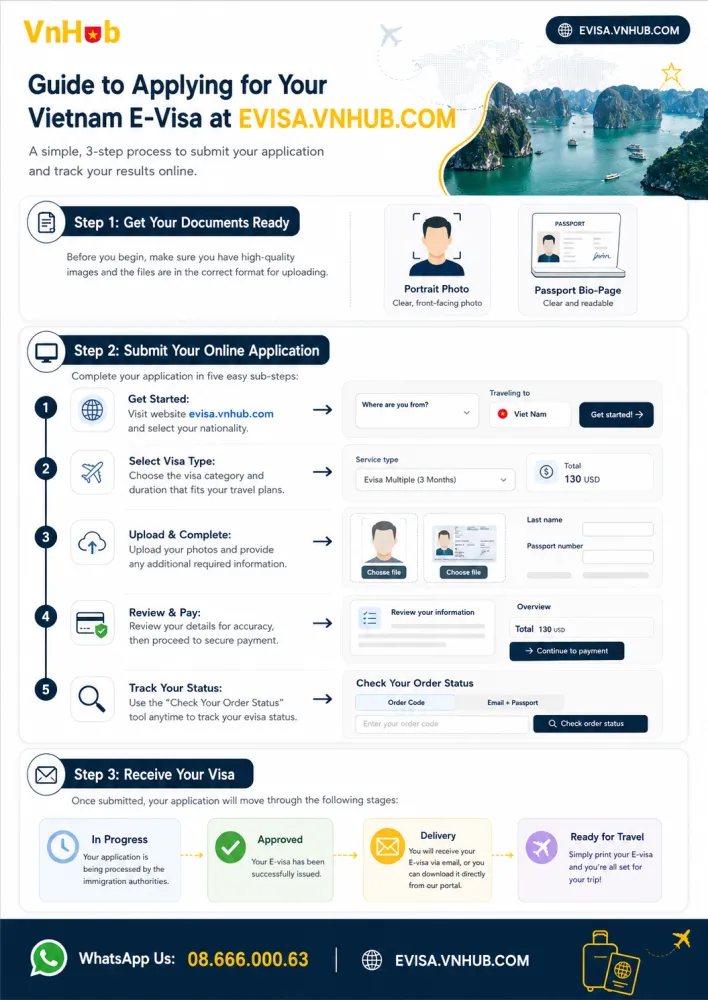
Australian citizens should apply through the official Vietnam Immigration Portal or official https://evisa.gov.vn/ website or you can use a trusted visa service provider such as Tan Van Lang via https://evisa.vnhub.com/ to handle the submission on your behalf.
Step 1: Check passport validity and travel plan
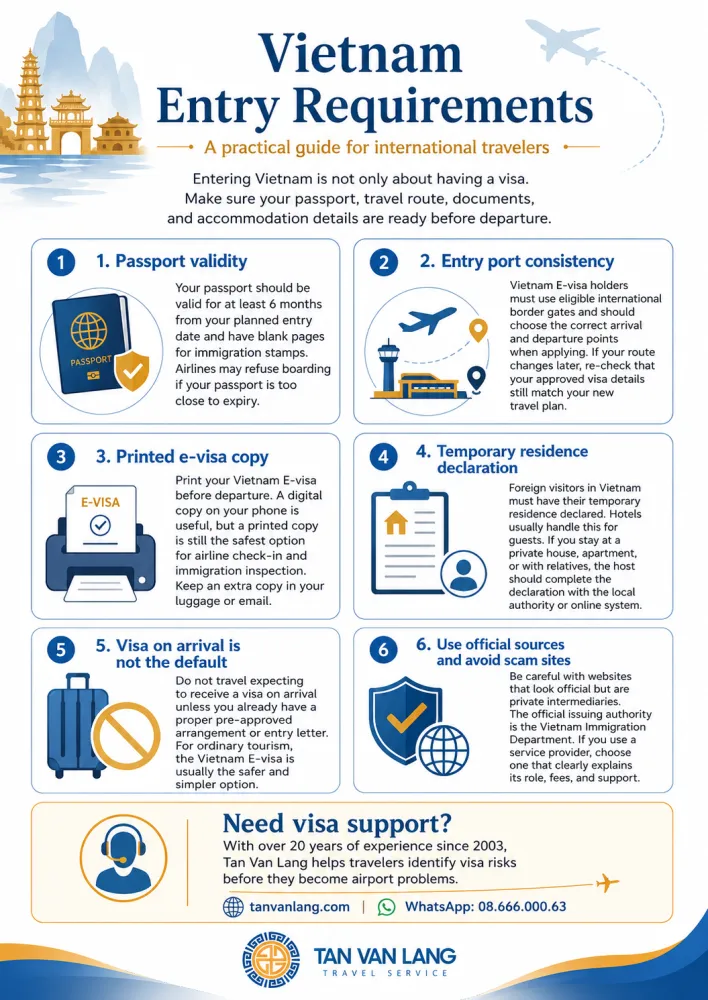
Your Australian passport should be valid for at least 6 months from the intended entry date. It should also have blank pages for immigration stamps.
You need a clear scan or photo of the passport data page. The image should show the full page, including passport number, full name, date of birth, nationality, expiry date and machine-readable zone.
You also need a recent portrait photo. The photo should be front-facing, clear, without glasses, and normally prepared against a plain white background.
Step 3: Complete the online e-visa form
Enter your personal information exactly as shown on the Australian passport. Pay close attention to full name order, date of birth, passport number, sex, nationality and expiry date.
Add your expected entry date, exit date, temporary address in Vietnam and entry/exit points. Do not choose a port of entry just because it appears first in the list.
Step 4: Select single entry or multiple entry
Choose a single entry visa if you will enter Vietnam once and leave once. This is suitable for many standard holidays.
Choose a multiple entry visa if you plan to leave Vietnam and return during the same visa validity period. This is common for Australians combining Vietnam with Thailand, Cambodia, Laos, Singapore or other regional trips.
Step 5: Pay the official fee
The Vietnam tourist visa fee for e-visa applications is generally 25 USD for single entry and 50 USD for multiple entry. This government fee is usually non-refundable even if the application is refused or the traveler enters incorrect information.
Use an international debit or credit card that supports online payment. Save the registration code after payment because it is required for checking the result.
Step 6: Check status and download the e-visa
Standard processing is commonly around 3 working days, but delays can happen during weekends, Vietnamese public holidays, peak travel seasons or when the application needs review. Australian travelers should not apply at the last minute.
Once approved, download the e-visa and check every detail. Print at least one copy and keep a digital copy on your phone.
Step 7: Present documents at departure and arrival
At check-in, the airline may ask to see your passport, e-visa and onward or return travel details. On arrival in Vietnam, immigration officers may ask for the printed e-visa and passport.
Keep your accommodation information available. Hotels and hosts in Vietnam must support temporary residence declaration after you arrive.
Tan Van Lang provides reliable Vietnam visa services backed by over 20 years of professional experience.
A strong Vietnam visa Australia application starts with clean documents. Small errors can lead to rejection, correction requests or travel disruption.
Requirement
What Australian applicants should prepare
Practical note
Australian passport
Valid for at least 6 months from intended entry
Check expiry before booking flights
Passport data page image
Clear color scan or photo
Avoid glare, cropped corners and shadows
Portrait photo
Recent front-facing photo, plain background
No glasses, no hat, no heavy editing
Travel details
Arrival date, exit date, entry and exit port
Match flight or land border plan
Vietnam address
Hotel, apartment or host address
Use the first temporary address if moving around
Payment card
International credit or debit card
Fee is usually non-refundable
The passport data page should be readable in full. If the system or officer cannot read your passport number clearly, the application may be delayed or refused.
The portrait photo should not be a selfie with poor lighting. Use a simple image that looks like a passport-style photo.
From our practical advisory work, the most common document issue is not missing paperwork. It is inconsistent data between the passport, ticket and e-visa form.
We support foreigners with accurate consultation and compliant visa solutions for Vietnam.
Vietnam visa fees and processing time for Australian applicants
The official e-visa Vietnam tourist visa fee is usually simple: 25 USD for single entry and 50 USD for multiple entry [4]. These are government processing fees paid through the electronic payment system.
Visa type
Official fee
Typical processing time
Refund policy
Single entry e-visa
25 USD
Commonly 3-5 working days
Usually non-refundable
Multiple entry e-visa
50 USD
Commonly 3-5 working days
Usually non-refundable
Sticker visa / approval letter route
Varies by case
Depends on dossier and authority
Depends on case and service arrangement
Processing time should be treated carefully. “3-5 working days” does not normally include weekends or public holidays.
If your flight is soon, a correction request can create a serious problem. This is why Tan Van Lang recommends checking all details before payment, not after submission.
Service fees charged by agencies are separate from official government fees. A legitimate service provider should explain what is included, what is paid to the authority, and what is charged for advisory or handling support.
A Vietnam e-visa can be valid for up to 90 days. However, the exact validity starts and ends according to the dates shown on the approved e-visa.
Australian travelers must not assume that a 90 day tourist visa automatically starts from the date they physically enter Vietnam. If your approved e-visa begins on 1 June and ends on 29 August, you must enter and leave within that approved period.
Item
Explanation
Validity period
The date range printed on the e-visa
Duration of stay
The time you may remain in Vietnam within that validity period
Single entry
You can enter once; the visa ends for entry use after exit
Multiple entry
You can enter and exit multiple times during validity
Port of entry
Must be an eligible international checkpoint and match practical travel plan
Entry port consistency is very important. If you selected Tan Son Nhat Airport but later changed your flight to Noi Bai Airport, you should check whether your e-visa and route remain suitable before departure.
Travelers should also check whether their port is eligible for e-visa entry and exit. Vietnam has designated international airports, land borders and seaports for e-visa use.
Temporary residence declaration is another practical point. After arrival, hotels, serviced apartments and hosts in Vietnam are responsible for declaring the foreigner’s temporary residence with local authorities.
Common reasons for visa rejection and how to avoid them
Most Vietnam tourist visa for Australian refusals or delays can be avoided with careful review. The e-visa system is simple, but it does not forgive careless data entry.
Common problem
Why it matters
How to avoid it
Wrong passport number
Visa may not match passport
Copy directly from passport data page
Name order mistake
Airline or immigration may question identity
Enter name exactly as passport shows
Cropped passport scan
Officer cannot verify data
Upload full page image
Poor portrait photo
Image may fail review
Use clear front-facing passport-style photo
Wrong entry port
Route may not match visa
Confirm airport or border before applying
Applying on scam sites
Overcharging or data risk
Use official portal or trusted adviser
Late application
No time to fix errors
Apply well before departure
Scam sites are a serious concern. Some websites look official but are private commercial sites, sometimes charging high fees while giving unclear responsibility if the application fails.
DFAT travel advice for Australians also warns travelers to use the official e-visa website. This is especially important because passport data, travel plans and payment details are sensitive.
From our practical experience, travelers should keep screenshots, payment confirmation and registration code after submission. These records help if the status search does not work smoothly or if the applicant needs professional support.
Visa extension rules can change, and not every tourist e-visa can be extended inside Vietnam in a simple way. Australian travelers should plan on leaving Vietnam before the e-visa expiry date unless they have received proper advice.
In many cases, the practical solution is to apply for a new e-visa and re-enter Vietnam after leaving the country. This is often used by travelers who plan a regional route through Cambodia, Thailand, Laos or Singapore.
For special cases, a sponsor in Vietnam may need to handle a formal procedure with the Vietnam Immigration Department. This depends on purpose, eligibility and documents.
Do not overstay. Overstaying can lead to fines, exit difficulties, future visa concerns and stressful airport procedures.
If your travel plan may exceed 90 days, speak with Tan Van Lang before choosing the visa route. A standard e-visa may not be the correct tool for every long-stay situation.
Travel tips for Australians visiting Vietnam
Australian citizens should check passport, visa, insurance and entry details before departure. Vietnam is a welcoming destination, but immigration compliance is strict at the border.
Keep printed documents
Print your e-visa before flying. Airlines and immigration officers may ask for a physical copy.
Also keep a copy of your hotel booking, return or onward ticket, and emergency contact details. These documents may not always be requested, but they are useful if questions arise.
Check passport validity 6 months before travel
Passport validity 6 months is a common rule for international travel and is especially important for Vietnam. A passport close to expiry can cause airline check-in problems even when the visa is approved.
If your passport is damaged, wet, torn or has unreadable details, renew it before applying. A visa issued on a damaged passport does not guarantee smooth boarding.
Match your port of entry with your route
Many Australians enter through Tan Son Nhat Airport in Ho Chi Minh City, Noi Bai Airport in Hanoi or Da Nang International Airport. Others use land borders from Cambodia or Laos.
Your selected port of entry should match your real travel route. Last-minute changes should be checked before travel.
Understand temporary residence declaration
After entering Vietnam, your hotel or host must register your temporary residence. This is a normal immigration administration requirement.
If you stay with friends or relatives, remind the host to complete the temporary residence declaration. This can matter if you later need visa support, police confirmation or immigration assistance.
Follow DFAT travel advice
Australian citizens should check DFAT travel advice before departure. Entry conditions, local rules, health notices and security guidance can change.
Use DFAT for travel safety awareness and Vietnamese official sources for visa decisions. If sources conflict or are unclear, ask for professional case review before relying on assumptions.
Frequently asked questions
Can Australians get a Vietnam visa on arrival in 2026?
Australians should not rely on arriving in Vietnam without prior approval and asking for a visa at the airport. The old phrase Vietnam visa on arrival Australia can be misleading.In 2026, most Australian tourists should use the Vietnam e-visa before departure. A visa approval letter or sticker visa route may apply in sponsored or special cases, but it must be arranged before travel.
How long can an Australian citizen stay in Vietnam on a tourist visa?
An Australian citizen may receive a Vietnam e-visa valid for up to 90 days. The exact stay must follow the validity dates printed on the approved visa.If the e-visa is single entry, you can enter Vietnam once. If it is multiple entry, you can leave and re-enter during the approved validity period.
How much does a Vietnam tourist visa cost for Australian passport holders?
For e-visa applications, the official fee is generally 25 USD for single entry and 50 USD for multiple entry. Agency service fees, if used, are separate from government fees.The Vietnam tourist visa fee is normally non-refundable after payment. Review all information carefully before submitting.
How long does it take to get a Vietnam e-visa from Australia?
Standard e-visa processing is commonly around 3 working days. Weekends, Vietnamese public holidays, peak travel periods, correction requests or system issues may make it longer.Australian travelers should apply early. Do not wait until the final days before departure.
Do I need a return ticket to apply for a Vietnam tourist visa?
The e-visa form focuses mainly on passport details, travel dates, purpose, address and entry/exit points. However, airlines or immigration officers may ask about onward or return travel.From our advisory experience, travelers should keep proof of onward travel available. This is especially useful for short tourist trips.
Can I extend my Vietnam tourist visa while in Vietnam?
Extension is not guaranteed and depends on current rules, purpose and case details. Many travelers must leave Vietnam and apply for a new visa if they want to return.Do not wait until the visa is about to expire. Contact a qualified adviser early if your plan changes.
Is the Vietnam e-visa valid for multiple entries for Australians?
Yes. The Vietnam e-visa system supports both single entry and multiple entry options for Australian citizens.Choose multiple entry if you plan to visit Vietnam, leave for another country, and return within the same visa validity period. Choose single entry if Vietnam is your only entry and exit journey.
Conclusion
The safest approach is simple: Check your passport, choose the correct visa type, apply through the right channel, and make sure your travel route matches the approved visa. A Vietnam tourist visa for Australian passport holders is usually straightforward, but it still requires careful attention.
For Australian citizens who want a smooth, well-checked application, Tan Van Lang can review the case and provide practical advice from document preparation to entry planning. Contact Tan Van Lang today if you need more detailed advice on Vietnam visas.