Home » Vietnam Visa » Vietnam Multiple Entry Visa 2026: Cost, Validity & How to Apply
Vietnam Multiple Entry Visa 2026: Cost, Validity & How to Apply
Last update:
A Vietnam multiple entry visa allows foreign travelers to enter, exit, and re-enter Vietnam several times within the visa’s validity period without applying again for each trip. The most common option today is the Vietnam E-visa, which can be issued for up to 90 days with single or multiple entry. This visa is suitable for tourists visiting nearby countries, business travelers attending repeated meetings, and foreigners with flexible schedules.
Applicants must check passport validity, entry requirements, approved checkpoints, government fees, and whether sponsorship is required for business or long-term purposes.
A Vietnam multiple entry visa is a visa that permits a foreign national to enter and exit Vietnam more than once during the visa validity period. Unlike a single entry visa, which becomes fully used after one entry, a multiple entry visa remains usable for repeated entries until the expiry date shown on the visa.
In simple terms, multiple entry status gives flexibility. You can enter Vietnam, travel to another country, and return to Vietnam without applying for a new visa each time, as long as the visa is still valid and your travel purpose remains consistent.
This visa is commonly chosen by:
Foreign business travelers attending meetings, factory visits, trade fairs, or contract negotiations.
Investors or company representatives who travel between Vietnam and nearby markets.
Tourists planning to visit Cambodia, Laos, Thailand, Singapore, or other regional destinations during the same trip.
Foreigners with family, work, study, or project commitments in Vietnam.
US citizens and other long-haul travelers who want more flexibility after arrival.
The term ‘Vietnam multiple-entry visa’ does not refer to a single visa category. It may refer to a multiple-entry Vietnam E-visa, a company-sponsored business visa DN1 or DN2, an investor-related visa, a work-related visa, or another visa category depending on the applicant’s purpose and eligibility.
Multiple entry vs single entry: what is the real difference?
Many applicants confuse visa validity with number of entries. These are two separate issues.
Visa validity tells you the time period during which the visa can be used. Entry type tells you whether the visa can be used once or multiple times.
Criteria
Single entry visa
Multiple entry visa
Number of entries
One entry only
Repeated entries during validity
Best for
One simple trip to Vietnam
Travelers leaving and returning to Vietnam
Cost
Usually lower
Usually higher
Risk if travel plans change
Higher, because re-entry requires a new visa
Lower, because re-entry is already allowed
Common use
Short vacation, single business visit
Regional travel, recurring business meetings, long business schedules
From our practical experience, a single entry visa may look cheaper at first. Yet it can become more expensive if the traveler later decides to visit another country and return to Vietnam.
Key benefits of choosing a Vietnam multiple entry visa
A Vietnam multiple entry visa offers practical benefits for travelers whose schedules are not fixed. It gives more control over travel planning and reduces the need to reapply every time you return.
Greater flexibility for regional travel
Vietnam is often used as a convenient hub for Southeast Asia. Many travelers enter Vietnam, visit Cambodia or Thailand, and then return to Vietnam for their outbound flight.
A multiple entry visa helps avoid the risk of being unable to board a return flight to Vietnam after a short trip outside the country.
Better fit for business travelers
Business visitors often have changing schedules. Meetings may be postponed, factory visits may be added, or a project may require travel between Vietnam and another country.
A Business visa DN1 or DN2 may be more suitable than a Tourist visa DL when the real purpose involves commercial meetings, cooperation, investment preparation, or work with a Vietnamese company. Using the wrong purpose may create problems during visa renewal, work permit processing, or future immigration review.
Cost-effective for repeated entries
A multiple entry visa usually costs more than a single entry visa. Yet it can save money when the traveler would otherwise need to apply for two or more separate visas.
This is especially true for travelers who need repeated entry through international airports Vietnam, land borders, or seaports.
Lower risk when travel plans change
Flight routes, business meetings, and family plans may change after the visa is issued. A multiple entry visa gives more room to adjust the itinerary without starting the visa application again.
Based on our advisory experience, this flexibility is one of the main reasons clients choose multiple entry even when they initially think they need only one visit.
Tan Van Lang provides reliable Vietnam visa services backed by over 20 years of professional experience.
The correct visa type depends on the traveler’s nationality, purpose of entry, expected stay, sponsorship status, and whether the traveler is applying online or through a company or representative office.
Visa type
Common validity
Entry type
Suitable for
Key note
Vietnam E-visa
Up to 90 days
Single or multiple
Tourism, short business trips, general visits
Applied online through the official e-visa system
Tourist visa DL
Commonly short-term
Single or multiple depending on approval
Tourism and personal travel
Must match the actual travel purpose
Business visa DN1
Usually company-sponsored
Single or multiple depending on approval
Foreigners working with Vietnamese enterprises
Requires a lawful inviting or sponsoring entity
Business visa DN2
Usually company-sponsored
Single or multiple depending on approval
Foreigners entering to provide services or conduct business activities
Eligible workers, investors, family members, or other long-term residents
Not a visa, but a stronger long-term residence document
The Vietnam E-visa is currently the most convenient route for many short-term travelers because it is online and may be issued for up to 90 days. Still, an e-visa is not always the right tool for every purpose.
For work, investment, long-term business presence, dependent residence, or repeated extended stays, a sponsored visa or Temporary Residence Card may be more appropriate.
Entry requirements should be checked before applying, not at the airport. A small mismatch in passport details, portrait photo, entry purpose, or port information can create delays or denial of boarding.
General requirements for most applicants
Most applicants should prepare the following:
A passport valid for at least 6 months from the intended date of entry.
A passport with blank visa pages if applying for a visa sticker or visa on arrival stamp.
A clear scan or photo of the passport bio page.
A recent portrait photo with a plain background.
A valid email address to receive the visa result.
A payment card for online government fees, if applying for a Vietnam E-visa.
Correct arrival and departure dates.
Correct entry and exit checkpoints.
A legitimate travel purpose that matches the visa category.
Passport validity is critical. If your passport expires before or soon after your intended stay, you should renew it before applying.
Extra requirements for business or sponsored cases
For a Business visa DN1, Business visa DN2, work-related entry, investor-related entry, or certain longer visa requests, additional documents may be needed.
Depending on the case, these may include:
Invitation or sponsorship letter from a Vietnamese company.
Business registration documents of the sponsoring company.
Form NA2 or other immigration forms used by the sponsor.
Form NA16 or specimen signature and seal registration, when required.
Consular legalization and Vietnamese translation for foreign-issued documents, where applicable.
From our practical advisory work, sponsorship quality matters. Immigration authorities may review whether the inviting entity is legally active, whether the foreigner’s purpose is consistent with the sponsor’s business activities, and whether previous immigration compliance was properly handled.
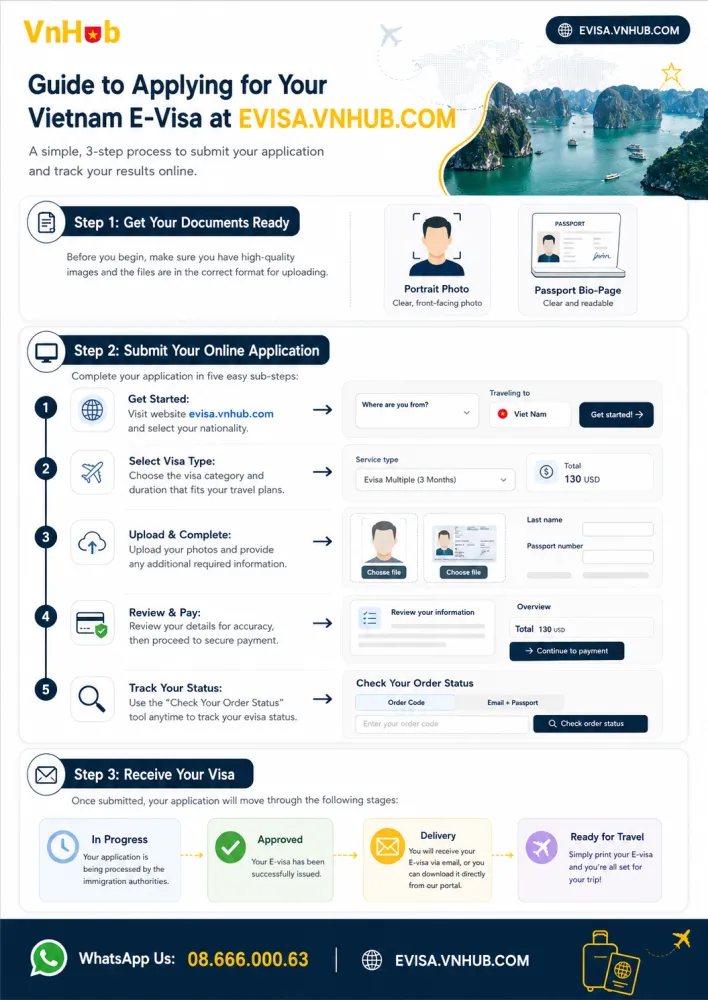
Step-by-step guide to applying for a Vietnam multiple entry E-visa
For many travelers, the Vietnam E-visa is the most direct option for a Vietnam multiple entry visa. It is issued through the electronic visa system managed by Vietnamese immigration authorities.
A Vietnam E-visa may be valid for up to 90 days and may be issued as single entry or multiple entry depending on the option selected and approved.
Step 1: Use the official Vietnam E-visa portal
Applicants should apply through the official government e-visa system. Be careful with websites that look similar to government portals but charge high service fees or provide unclear support.
Step 2: Select the correct entry type
When applying online, choose the multiple-entry option if you plan to leave Vietnam and return during the visa validity period.
Do not assume that a 90-day visa automatically means multiple entry. A 90-day e-visa can be single entry or multiple entry depending on the selected and approved option.
Step 3: Upload passport and portrait files
Prepare a clear passport bio page and a compliant portrait photo. Blurry images, shadows, cropped passport numbers, or mismatched names may cause delays or rejection.
The applicant’s full name, date of birth, nationality, passport number, gender, and passport expiry date must match the passport exactly.
Step 4: Enter travel information carefully
Input your intended date of entry, intended length of stay, entry checkpoint, and exit checkpoint. Although multiple entry allows repeated entry, the information should still be consistent with your initial travel plan.
Important regulations on entry and exit points can change, so travelers should check the latest list of approved international airports Vietnam, land border gates, and seaports before travel.
Step 5: Pay the government fee
The current government fee for a multiple-entry Vietnam E-visa is generally USD 50. The fee is paid online and is normally non-refundable, even if the application is refused.
Applicants should confirm the payment result and keep the application registration code. Without the code, checking the visa result may become difficult.
Step 6: Download, print, and verify the e-visa
After approval, download the e-visa PDF and check every detail. Verify the name, passport number, date of birth, nationality, entry type, validity dates, and entry purpose.
Print a hard copy and keep a digital copy. Airlines may check visa details before boarding, and immigration officers may request to see the approved visa on arrival.
We support foreigners with accurate consultation and compliant visa solutions for Vietnam.
Vietnam multiple entry visa fees and processing times
Government fees depend on visa type, entry type, and validity period. Service fees, delivery fees, urgent processing fees, translation fees, and legalization fees are separate.
Visa or fee type
Government or stamping fee reference
Notes
Single-entry Vietnam E-visa
USD 25
Online government fee, normally non-refundable
Multiple-entry Vietnam E-visa
USD 50
Valid up to 90 days if approved
Multiple-entry visa valid up to 90 days
USD 50
Often used as a reference for multiple-entry visa issuance fee
Multiple-entry visa valid over 90 days to 180 days
USD 95
Case-specific and usually not a simple tourist e-visa route
Multiple-entry visa valid over 180 days to 1 year
USD 135
Often requires stronger legal basis or sponsorship
Processing time can vary. A standard Vietnam E-visa may take several working days, but applicants should not wait until the last minute.
Application route
Estimated processing time
Practical note
Vietnam E-visa
Usually about 3 to 5 working days
Delays may happen during holidays, peak seasons, or if information is unclear
Sponsored approval letter
Often several working days, depending on case
Sponsor documents and immigration review affect timing
Embassy or consulate visa
Often 5 to 7 working days or more
Each mission may apply its own document and appointment process
Urgent assistance
Case-by-case
Not every case can be rushed, especially if sponsorship is weak
From our practical experience, urgent service is not a substitute for proper eligibility. If the case involves an expired passport, inconsistent purpose, overstay history, weak sponsor, or missing corporate documents, processing can take longer than expected.
Vietnam E-visa holders must enter and exit through approved checkpoints. These include designated international airports, land border gates, and seaports.
Travelers should not assume that every local border gate accepts e-visas. Before booking flights, bus tickets, or cruise itineraries, check whether the intended checkpoint is approved for e-visa entry or exit.
Can the first port of entry differ from the application?
For e-visas, applicants should provide accurate entry and exit information when applying. Current practice may allow some flexibility at approved e-visa checkpoints, but travelers should avoid relying on informal advice.
From our practical advisory work, consistency is still the safest approach. If your e-visa lists a specific airport, land border, or seaport, plan your trip around that information unless you have verified the latest rule and airline practice.
What about subsequent entries?
If your visa is approved as multiple entry, you may exit and re-enter Vietnam during the validity period. Each re-entry must still be through a lawful international checkpoint and must comply with immigration inspection.
A multiple entry visa does not remove all entry requirements. Immigration officers may still check passport validity, visa validity, purpose of entry, travel history, and whether the traveler is subject to any entry restriction.
Vietnam visa online: Avoiding scam sites and common mistakes
Vietnam visa online services can be helpful when handled by a legitimate advisory team. Yet the online space also contains confusing websites, inflated fee pages, and unofficial portals designed to look like government systems.
Before submitting personal data, check whether the website is an official government portal, a licensed service provider, or an unknown intermediary. Do not upload your passport to websites that hide their company information, refund rules, or contact details.
Common online visa mistakes include:
Selecting single entry instead of multiple entry.
Entering the wrong passport number.
Reversing first name and surname in a way that causes airline confusion.
Choosing the wrong nationality.
Uploading a portrait that does not meet basic standards.
Applying too close to the flight date.
Assuming the e-visa fee is refundable.
Using a tourist visa for a business purpose that requires sponsorship.
Forgetting to check whether the planned border gate accepts e-visas.
Tan Van Lang’s role is not only to submit forms. Our advisory team reviews the purpose, timing, visa type, supporting documents, and practical risks before recommending a filing route.
Temporary residence registration after entry
Foreigners staying in Vietnam must comply with temporary residence registration rules. Hotels usually handle this for guests, but private landlords, serviced apartments, employers, or sponsors may also have responsibilities depending on the arrangement.
For company-sponsored foreigners, the sponsor should make sure the foreigner’s address and stay status are properly recorded. Failure to register temporary residence can create problems during extension, work permit, Temporary Residence Card application, or future immigration review.
Based on our advisory experience, temporary residence is often ignored because it feels like an administrative detail. In reality, it is one of the first things immigration officers may check when reviewing a stay extension or long-term residence request.
When should you consider a Temporary Residence Card instead?
A Temporary Residence Card is not the same as a visa. It is a residence document that may allow eligible foreigners to live in Vietnam and enter or exit multiple times during its validity.
You may consider a Temporary Residence Card if you are:
A foreign worker with a valid work permit or work permit exemption.
A foreign investor meeting legal capital or investment conditions.
A dependent family member of an eligible foreigner or Vietnamese citizen.
A person with a long-term lawful reason to stay in Vietnam.
A Temporary Residence Card can reduce repeated visa applications. Yet it requires stronger documents, and some foreign-issued papers may need consular legalization, translation, and notarization before use in Vietnam.
Tan Van Lang often advises clients to compare the cost and risk of repeated short-term visas against the stability of a proper long-term residence route.
Practical checklist before applying
Before applying for a Vietnam multiple entry visa, review the following checklist.
Question
Why it matters
Is your passport valid for at least 6 months?
Airlines and immigration may deny travel if passport validity is insufficient
Do you need to leave and re-enter Vietnam?
If yes, single entry may not be enough
Is your purpose tourism, business, work, investment, or family visit?
The visa category must match the real purpose
Are you using the official Vietnam E-visa portal or a trusted advisor?
This reduces scam and data risk
Did you choose multiple entry on the application?
A 90-day visa is not automatically multiple entry
Are your entry and exit checkpoints approved?
E-visa use is limited to designated checkpoints
Do you need a sponsor company?
Business, work, and long-term cases often require sponsorship
Do you need consular legalization?
Foreign-issued documents may not be accepted without legalization
Have you planned temporary residence registration?
This may affect future extension or residence procedures
Frequently asked questions about Vietnam multiple entry visa
1. Can I switch from a single entry to a multiple entry visa while inside Vietnam?
In many cases, you cannot simply “switch” a single entry visa into a multiple entry visa on request. The available options depend on your visa type, purpose, sponsor, and current immigration policy.If you already entered Vietnam on a single entry visa and now need to leave and return, you should seek advice before departure. You may need to apply for a new visa or use another lawful route.
2. What is the maximum duration of stay allowed for each entry on a multiple entry visa?
The stay period depends on the visa validity and the visa type. A Vietnam E-visa may be valid for up to 90 days, but the exact permitted period is shown on the approved visa.For sponsored or longer-term visas, the duration depends on the approval and legal basis. Always read the validity dates and conditions on the visa document.
3. Is the E-visa fee for multiple entry refundable if my application is denied?
No. The Vietnam E-visa government fee is generally non-refundable, even if the application is refused or entered incorrectly.This is why applicants should check passport details, entry type, photo quality, and travel dates carefully before payment.
4. Do US citizens still have access to the 1-year multiple entry visa option?
US citizens should not assume that a 1-year multiple entry visa is automatically available for tourism. Current practice usually requires the correct legal basis, purpose, and in many longer cases, sponsorship or another eligible category.For many short-term visitors, the 90-day multiple-entry Vietnam E-visa is the more practical route. For business, work, investment, or long-term stay, a separate assessment is recommended.
5. Can I apply for a multiple entry visa without a sponsor company for tourism?
Yes, many tourists can apply for a multiple-entry Vietnam E-visa without a sponsor company if they meet the e-visa conditions and their travel purpose is tourism or another eligible short-term purpose.A sponsor is usually more relevant for business, work, investment, or long-term residence cases.
6. What should I do if my passport expires before my multiple entry visa does?
You should renew your passport before applying if the remaining validity is short. A visa is linked to the passport used in the application, so passport changes can create travel complications.If your passport changes after visa issuance, seek advice before travel. Do not assume the old visa can be used with a new passport without checking.
7. Are there any restrictions on the number of times I can exit and re-enter within the visa’s validity?
A multiple entry visa allows repeated entries during its validity period. However, each entry is still subject to immigration inspection and must match lawful entry requirements.There is no practical benefit in excessive border runs if the travel pattern appears inconsistent with the stated purpose. Travelers with repeated long stays should consider whether a more suitable visa or Temporary Residence Card is needed.
Conclusion
A Vietnam multiple entry visa is a powerful option for travelers who need flexibility, but it must be selected and used correctly. The safest approach is to match your visa type with your real purpose, confirm your entry requirements, use the official Vietnam E-visa system or a trusted advisor, and avoid last-minute applications.
If your case involves business activities, sponsorship, long-stay planning, visa extension, a Temporary Residence Card, or consular legalization, contact Tan Van Lang for thorough consultation before applying.