Vietnam visa types are classified based on your purpose of entry, such as tourism, business, work, investment, family visit, or short-term travel via e-visa. Each visa type has a specific code, validity period, permitted activities, and legal requirements, and choosing the wrong one may lead to entry refusal or penalties. Vietnam also offers visa exemption policies and a 5-year visa exemption certificate for eligible cases. Understanding the differences between visa types helps you enter Vietnam legally, avoid compliance risks, and plan long-term stay options more efficiently.
Vietnam Visa Services for Foreigners
Guaranteed On-Time Processing – Complete Application Consultation Within 2 Hours
Established in 2003 with over 20 years of experience – 10,000+ successful Vietnam visa applications handled.
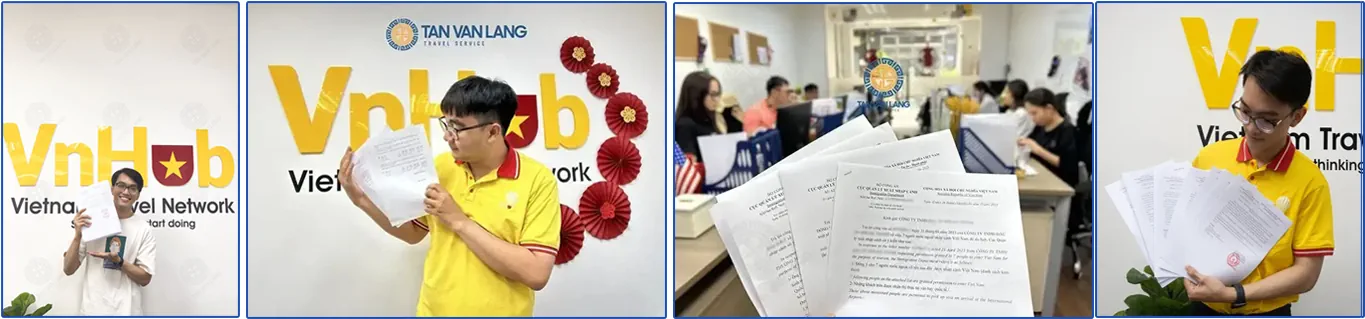
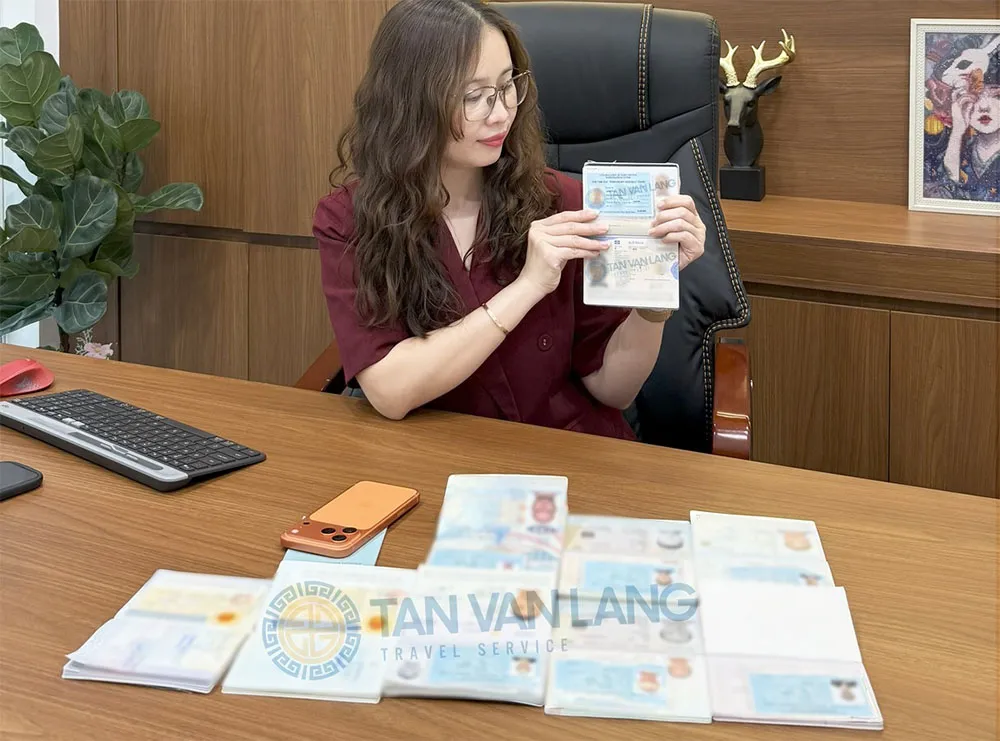
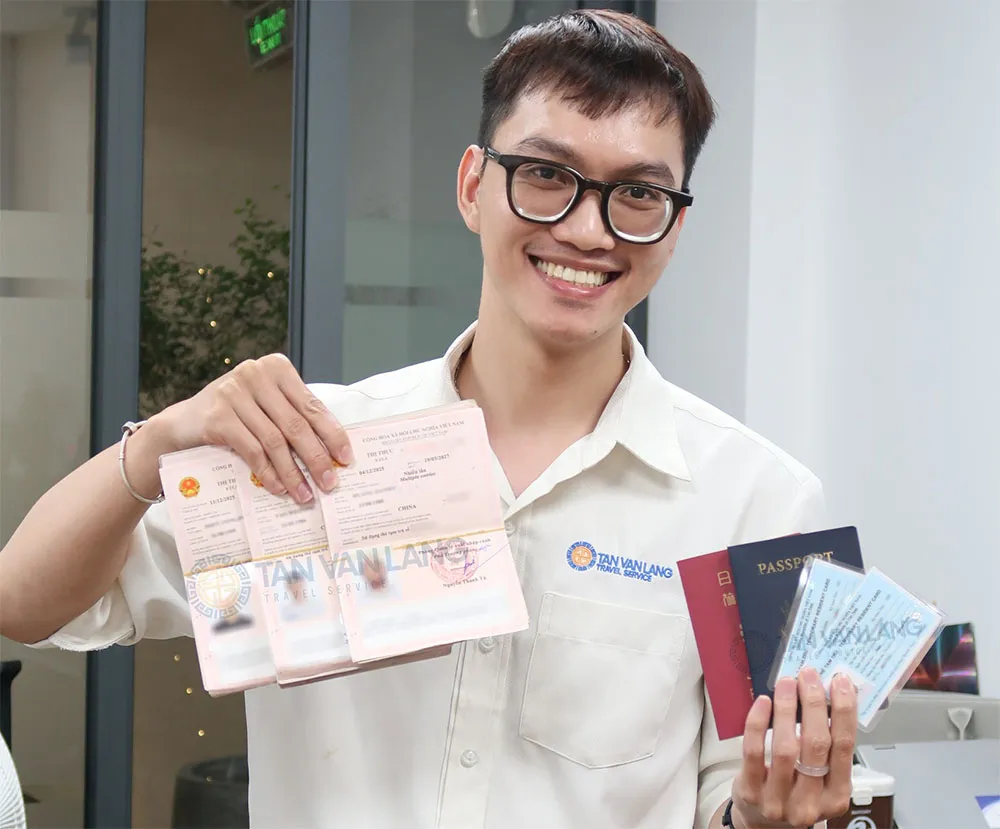
Vietnam visa service results for foreigners at Tan Van Lang
A Vietnam visa (also called a visa or entry visa) is an official document issued by Vietnam’s immigration authorities or Vietnam’s diplomatic missions overseas, allowing a foreign national to enter, exit, or transit Vietnam within a specific period.
Each Vietnam visa type typically includes:
A visa code (for example: DL, DN1, DN2, LD1, LD2, DT1…)
A maximum stay/validity
Permitted activities and limits based on your purpose
Different application documents and sponsorship rules
Picking the right visa type helps you enter smoothly, work or stay legally, and reduce the risk of trouble on future entries.
The DL visa is the most common option for people coming to Vietnam for tourism, sightseeing, holidays, or cultural experiences.
Visa code: DL
Typical validity: up to 30 days (single-entry or multiple-entry depending on issuance)
What you can do: travel within Vietnam for personal itinerary or tours
Important note: DL is not for employment, business operation, or receiving salary in Vietnam
Business visa (DN1, DN2): business trips and commercial activities
The Vietnam DN visa (often called a business visa) is for foreigners entering Vietnam for business-related purposes. Under current rules, DN is divided into DN1 and DN2.
DN1: for foreigners working with a Vietnam-based business/organization that has legal status under Vietnamese law
DN2: for foreigners entering Vietnam to offer services, establish a commercial presence, or conduct activities under international treaties to which Vietnam is a party
Typical validity: up to 12 months (case-dependent)
Practical warning from real cases: A DN visa is not the same as a TRC, and DN does not automatically mean you can work long-term and get paid in Vietnam. Many paid roles require a proper work pathway (work permit / exemption + LD visa and then TRC).
Work visa (LD1, LD2): legal employment in Vietnam
If your goal is to work in Vietnam properly, the LD visa is the correct lane.
LD1: for foreign employees exempt from a work permit
LD2: for foreign employees who must have a work permit
Maximum validity: up to 2 years (and often paired with TRC planning)
Common core documents: company sponsorship/guarantee + work permit or work-permit exemption confirmation
Investor visa (DT1, DT2, DT3, DT4): for foreign investors and capital contribution
A Vietnam DT visa is issued to foreign investors or representatives of foreign organizations investing in Vietnam (setting up a company, contributing capital, etc.). This is often the starting point for an Investor TRC, potentially up to long validity depending on category.
DT1: very large investment / priority sectors — validity up to 5 years
DT2: mid–large investment — validity up to 5 years
DT3: medium investment — validity up to 3 years
DT4: small investment — validity up to 12 months
(Investor TRC eligibility depends on your case structure and supporting documents; we advise confirming the correct DT code before submission to avoid delays.)
Family visit visa (TT): visit family and dependents
The TT visa is for foreigners visiting or staying with family in Vietnam (commonly spouse/child of a Vietnamese citizen, or dependents of foreigners legally living/working/studying in Vietnam).
Maximum validity: up to 12 months
What you can do: stay with family; in some cases, you may later switch to another visa type if you meet the requirements
Key requirement: proof of relationship (marriage certificate, birth certificate, etc.)
Vietnam e-visa (electronic visa): the easiest online option
Vietnam e-visa is issued online via Vietnam’s immigration e-visa system. You apply remotely, receive approval, print the e-visa, and present it at eligible entry points.
Key updates under Law No. 23/2023/QH15:
E-visa validity is up to 90 days, and can be single-entry or multiple-entry
Vietnam expanded e-visa policy significantly from 15 August 2023 onward
In practice, e-visa is widely used for tourism, and in some cases short business or family visits – depending on how your trip is structured and what you need after arrival.
>>> Read more:Vietnam visa fees: Updated costs & What travelers should expect 2026
Visa exemption and who can enter Vietnam without a visa
Vietnam has visa exemption policies for certain travelers, plus a Visa Exemption Certificate (often called the “5-year visa exemption”).
Visa exemption (bilateral and unilateral)
Bilateral exemption: based on agreements between Vietnam and other countries (commonly many ASEAN member states). Allowed stays vary by nationality (often 14–30 days).
Unilateral exemption: Vietnam grants visa-free entry to a list of nationalities under Vietnam’s unilateral policy, and the temporary stay period is 45 days under the amended legal framework
Entry conditions typically still apply (passport validity, no entry ban, onward ticket depending on case).
Government Resolution 229/NQ-CP: additional 12 countries visa-free for tourism
Vietnam’s Government issued Resolution 229/NQ-CP (dated 08 August 2025) on visa exemption for tourism stimulation, effective from 15 August 2025 until 14 August 2028, for citizens of 12 countries: Belgium, Bulgaria, Croatia, Czech Republic, Hungary, Luxembourg, Netherlands, Poland, Romania, Slovakia, Slovenia, and Switzerland.
Main purpose of entry: tourism, business trip, paid employment, investment, family visit
Expected length of stay: short (days/weeks) vs long (months/years)
Nationality: are you eligible for visa exemption or e-visa?
Sponsor/relationship in Vietnam: company sponsor, investor documents, or family relationship proof
Do not “enter on tourist and work anyway.” Using a visa for the wrong purpose can trigger administrative penalties, forced exit, and future entry issues. If you’re unsure, it’s safer to confirm your correct visa route first—then prepare the right file set from the beginning.
Tan Van Lang supports Vietnam entry visas for both individuals and companies, helping you pick the correct visa type, prepare documents properly, and reduce rework.
DN1 is for foreigners working with a Vietnam business/organization that has legal status under Vietnamese law, while DN2 is for foreigners entering to provide services, establish commercial presence, or do activities under international treaties Vietnam has joined.
What can Vietnam e-visa be used for?
In practice, Vietnam e-visa is widely used for tourism, and depending on the case structure it may also support short trips for visiting family or short business purposes. The key is to keep your activities consistent with your declared purpose and your supporting documents.
Can I convert from a tourist visa to a work visa in Vietnam?
In some cases, yes—if you have a qualified Vietnam sponsor and the required work permit or work-permit exemption confirmation. The conversion route depends on your profile and compliance history, so it should be planned carefully before you enter.
What is the difference between LD1 and LD2?
LD1 applies to foreigners confirmed as exempt from a work permit. LD2 applies to foreigners who must have a work permit.
How long are investor visas valid?
Common maximum validity is:
DT1–DT2: up to 5 years
DT3: up to 3 years
DT4: up to 1 year
Who can get the Vietnam 5-year visa exemption?
Overseas Vietnamese, and foreigners who are the spouse/child of a Vietnamese citizen or overseas Vietnamese (subject to proper proof and valid documents).
Does choosing the wrong visa affect future entry to Vietnam?
Yes. Incorrect visa purpose or misuse can lead to refusal, penalties, forced exit, and higher scrutiny on future entries. If you want a clean immigration history, choose the correct visa type from the start.
If you tell Tan Van Lang your nationality, purpose, and planned length of stay, we can map the correct visa type (or visa exemption route) and advise the fastest compliant option. Call Hotline: 08.666.000.63 (WhatsApp) for quick screening and full-service support.
Tôi là Nguyễn Thanh Trường, hiện là chuyên viên tư vấn visa tại Tân Văn Lang, đơn vị uy tín trong lĩnh vực hỗ trợ thị thực quốc tế.
Với hơn 5 năm kinh nghiệm trong việc tư vấn hồ sơ xuất cảnh đi các nước như Mỹ, Úc, Canada, châu Âu và châu Á, tôi đã hỗ trợ thành công hàng nghìn khách hàng đạt visa với tỷ lệ đậu cao.
Tôi thường xuyên cập nhật quy định visa mới nhất và chia sẻ thông tin hữu ích thông qua các bài viết trên website chính thức của Tân Văn Lang cũng như các kênh truyền thông khác, góp phần nâng cao nhận thức và chuẩn bị tốt nhất cho người dân Việt Nam có nhu cầu đi nước ngoài.





 Expat living in Vietnam visa: A detailed guide for foreigners 2026
  Do I need work permit or visa Vietnam? A detailed guide for foreigners 2026
  Differences of Work permit vs work visa Vietnam 2026
  Differences of Vietnam visa Single entry vs Multiple entry 2026
  Vietnam visa for 5 years: Guide, Fees & Requirements 2026
  Vietnam visa for Maldivians citizens 2026: Guide, Fees & Requirements