Vietnam visa for Spanish citizens is now much easier to understand under Vietnam’s latest immigration rules. Spanish citizens can enter Vietnam without a visa for up to 45 days in many standard cases, while those needing a longer stay can apply for a Vietnam e-visa valid for up to 90 days, with single-entry or multiple-entry options. For more complex trips, an embassy-based or pre-arranged visa route may still be appropriate.
Vietnam Visa Consulting Services for Foreigners
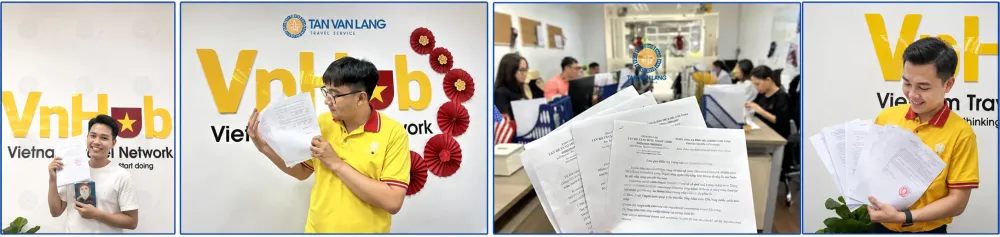
Established in 2003, backed by 20+ years of experience – Trusted with over 10,000 successful Vietnam visa consultations.
Our Vietnam Visa Consulting Success for Foreign Clients
Vietnam visa exemption for Spanish passport holders
According to the latest 2025-2026 legal framework, Spanish citizens benefit from Vietnam’s unilateral visa exemption policy for a temporary stay of up to 45 days. In practical terms, this means many Spanish tourists and short-term visitors do not need to apply for a visa in advance if their trip falls fully within the exemption conditions.
This 45-day stay is highly useful for short holidays, family visits, exploratory business trips, and quick inspections before a longer assignment. For many travelers from Spain, it is the fastest and simplest route because there is no need to prepare an e-visa file when the trip remains within the permitted stay period.
That said, visa exemption is not always the best choice. If you plan to stay longer than 45 days, need multiple entries, want a clearer document trail before departure, or anticipate schedule changes, the Vietnam e-visa is often the more reliable option.
Here is the practical difference:
| Option | Main use case | Length of stay | Entry type |
|---|---|---|---|
| Visa exemption | Short trip within exemption policy | Up to 45 days | Usually one admission per entry event under the exemption framework |
| Vietnam e-visa | Longer or more structured travel | Up to 90 days | Single entry or multiple entry |
| Embassy or pre-arranged visa route | Special cases, complex purposes, document-sensitive cases | Depends on approval | Based on approval and issuance route |
From our daily work with immigration files, we usually advise Spanish travelers not to rely on the 45-day visa exemption if they already know they will exceed it. It is better to choose the correct route from the beginning than to enter under one assumption and later try to repair the status.
Another point worth noting is passport validity. Even if a Spanish citizen is exempt from a visa, the passport still needs to remain valid for international travel and border inspection. Airlines may deny boarding if the document situation is weak or inconsistent with the planned itinerary.
>>> Read more: How to apply for Vietnam visa? Update 2026
Step-by-step guide to applying for a Vietnam e-visa
For Spanish citizens who need a longer stay or more flexibility, the Vietnam e-visa is usually the best application method. The current e-visa policy allows a validity period of up to 90 days, and the visa may be issued as single-entry or multiple-entry depending on the approved application.
Based on our practical casework, the e-visa route is the best fit for most independent travelers because it can be filed online without visiting the Vietnam Embassy in Madrid. It is also the most efficient route for people who already know their intended arrival port and travel dates.
Follow this application sequence carefully:
Prepare the core information before starting
You should prepare your Spanish passport, a passport-style photo, your passport data page image, your expected entry date, your intended exit date, and your exact port of arrival. These details must be entered consistently.
A critical detail most applicants overlook is the entry port selection. The port listed in the application should match the port you actually use to enter Vietnam, especially when traveling on an e-visa.
Use only the official e-visa portal
Do not submit your application through lookalike commercial websites that imitate government portals. Many scam sites charge inflated fees, create confusion, or submit incorrect information without proper legal responsibility.
The safest approach is to use the official government visa platform. If you are unsure whether a site is genuine, stop immediately and verify the domain before paying.
Complete the application exactly as shown on the passport
Every personal detail should match the passport bio page. This includes full name order, nationality, passport number, date of birth, and passport expiry date.
Even small formatting errors can lead to delays, amendment requests, or refusal. The most common mistakes we see include missing middle names, wrong passport expiry dates, and selecting the wrong visa validity period.
Upload the correct documents
The uploaded passport page must be clear, readable, and complete. The portrait photo should follow the official image requirements and should not be over-edited.
Blurry uploads are one of the fastest ways to create avoidable processing problems. A clean document file is often more important than applicants realize.
Review purpose, dates, and entry port again before payment
Before moving to payment, recheck the key fields. Your purpose of travel, duration, arrival checkpoint, and exit expectations should all make sense together.
If your trip includes leaving Vietnam and returning again within the same journey, you should consider whether a multiple-entry e-visa is needed. Many travelers accidentally choose single-entry and only realize the issue after booking onward travel.
Pay the official fee and keep the registration code
After submission, you will pay the e-visa fee through the official system. Keep the registration code, application email, and date of birth exactly as entered because you will need them to track the result.
We strongly recommend storing screenshots and a written note of this information. Lost registration codes create unnecessary stress close to departure.
Download and print the approved e-visa
Once the e-visa is approved, download the issued document and print a hard copy. Even though the visa is electronic, paper backup is still useful during airline check-in and border procedures.
Spanish travelers should also keep a digital copy on their phone and in cloud storage. This reduces risk if a printed copy is misplaced during transit.
>>> Read more: How long does Vietnam visa take? Update 2026
Documents required for Spanish travelers
The document set for Spanish citizens is usually simple, but accuracy matters more than volume. Most e-visa problems are caused by mismatched information rather than missing paperwork.
For a standard Vietnam e-visa application, Spanish travelers should normally prepare:
- A Spanish passport valid for the planned trip
- A clear image of the passport data page
- A recent portrait photo
- Intended entry date and exit date
- Exact entry port and expected exit port
- Contact details and application email
- Accommodation or trip information if required during the filing process
For a business visa route or a more specialized immigration process, additional supporting documents may be required. These can include sponsor information, company details, approval documents, or other papers depending on the nature of the trip.
This is where many online articles oversimplify the process. A tourist visa scenario and a business visa scenario may look similar on the surface, but they are not always handled the same way in practice.
Here is a quick comparison:
| Travel purpose | Typical route | Supporting level |
|---|---|---|
| Tourism | Visa exemption or e-visa | Usually light documentation |
| Short business visit | E-visa or sponsor-based route | May need company or trip details |
| Long stay or technical assignment | Specialized immigration route | Higher document control |
| Family visit or complex entry plan | Case-specific | Depends on status and relationship |
From our 20+ years of practical experience, Spanish nationals should not assume that every longer stay can simply be solved after entry. The stronger approach is to choose the right route before departure and file the documents that match the real purpose of the trip.
>>> Read more: Differences of Vietnam visa Single entry vs Multiple entry 2026
Vietnam visa fees and processing times for Spain
For Spanish citizens applying online, the official e-visa fee depends on whether the application is for single entry or multiple entry. Processing times published on the official immigration system are generally counted in working days, not calendar days.
That matters because public holidays in Vietnam can affect the timeline. If you apply too close to your departure date, even a small correction request can disrupt the trip.
Here is the current practical fee structure commonly used on the official e-visa system [1] :
| Visa type | Official fee | Usual official processing benchmark |
|---|---|---|
| Single-entry e-visa | USD 25 | Around 3 working days |
| Multiple-entry e-visa | USD 50 | Around 3 working days |
These are baseline official fees, not the total cost charged by private support agencies. If a traveler uses an advisory or filing support service, professional service charges may apply separately.
Based on our daily processing experience, Spanish applicants should not plan on the absolute minimum timeline unless the case is very straightforward. A safer planning window is to submit well in advance, especially during Vietnamese public holidays, summer travel peaks, or when the traveler has an unusual itinerary.
A practical recommendation is this:
- Standard travel planning: apply at least 1 to 2 weeks before departure
- Trips during holiday periods: allow extra buffer
- Multi-country itineraries: verify entry and re-entry sequence before filing
- Urgent cases: seek case review before paying, not after refusal
This approach reduces risk. It also gives enough time to correct application errors if the immigration system requests clarification.
>>> Read more: Updated Vietnam visa / E-visa requirements 2026: Who needs a Visa, how to apply
List of entry ports for electronic visa holders
Spanish citizens using a Vietnam e-visa must enter and exit through ports approved for e-visa use. Vietnam has a designated list of airports, land border gates, and seaports that accept e-visa holders.
The official immigration portal publishes the current list. Because port arrangements can be updated administratively, travelers should always verify the current list on the official website before finalizing flights and ground transport.
In practice, many Spanish travelers use major international airports such as:
- Noi Bai International Airport in Hanoi
- Tan Son Nhat International Airport in Ho Chi Minh City
- Da Nang International Airport in Da Nang
- Cam Ranh International Airport in Khanh Hoa
- Phu Quoc International Airport in Kien Giang
A critical detail most applicants overlook is that choosing an entry port carelessly can create real boarding or arrival issues. If your e-visa states one entry checkpoint, do not casually assume another checkpoint will always be accepted without problem.
From our case handling, this is one of the most common avoidable errors for first-time visitors. Travelers often focus on visa approval but forget that border-use conditions must also line up with the approval record.
>>> Read more: Vietnam visa fees 2026: Updated costs & What travelers should expect
Can Spanish citizens apply for a visa at the Vietnamese Embassy?
Yes. Spanish citizens can still use an embassy-based or representative-office-based route in suitable cases. The Embassy of Vietnam in Madrid remains a relevant option for applicants whose travel purpose, document structure, or case complexity makes the online e-visa route less suitable.
The embassy contact details commonly used by applicants in Spain are:
- Embassy of Vietnam in Spain
- Avenida de Alfonso XIII, 54, 28016 Madrid
- Tel: +34-91-5102867
- Fax: +34-91-4157067
- Email: [email protected]
Embassy hours may change around Vietnamese and Spanish public holidays. For that reason, applicants should check the embassy website or contact the consular section before visiting or sending documents.
In our advisory practice, we usually recommend the embassy route only when the traveler has a reason not to use the e-visa system, or where a pre-approved visa issuance structure is more suitable. This can happen in business, document-sensitive, or procedural-exception cases.
>>> Read more: Vietnam Airport Fast Track Service 2026 – Skip the Lines, Save Time
Vietnam e-visa versus Vietnam visa-on-arrival – Which one is better?
For most Spanish citizens, the Vietnam e-visa is the better and more modern route. It is direct, official, and usually simpler for tourism and short business travel.
The term visa on arrival often causes confusion. In practice, this is not a spontaneous airport-only visa for ordinary travelers without prior approval.
The usual structure is that a sponsor, agency, or authorized party arranges an approval process first, and then the traveler receives the visa at the registered airport checkpoint or another approved issuance point. This is why many travelers who read old articles misunderstand the process.
Here is a practical comparison:
| Criteria | Vietnam e-visa | Pre-arranged visa on arrival / visa issuance route |
|---|---|---|
| How it starts | Self-application online | Requires pre-approval route |
| Best for | Tourists, short business trips, clear itineraries | Special or non-standard cases |
| Travel convenience | High | Medium, depends on paperwork |
| Risk of confusion | Lower if filed correctly | Higher if traveler misunderstands approval rules |
| Need for sponsor in many cases | Usually no for standard e-visa filing | Often yes, depending on route |
Based on long-term practical experience, we advise Spanish travelers to treat e-visa as the default route when visa exemption is not sufficient. The airport issuance route should only be used when the traveler clearly understands the legal structure behind it.
>>> Read more: List of countries that are difficult to apply for Vietnam visa 2026
Temporary residence declaration and immigration compliance after arrival
Getting into Vietnam is only one part of legal compliance. After arrival, foreign visitors must also comply with residence and reporting rules during their stay.
Temporary residence declaration is one of the most overlooked obligations. If a Spanish traveler stays at a hotel, resort, or licensed accommodation, the host usually handles this registration with the local authorities.
If the traveler stays in a private house, apartment, or with friends or family, the declaration should not be ignored. The hosting party may need to complete the temporary residence procedure with the competent local police or through the applicable online/public security channel depending on the locality.
From our daily work with immigration matters, this is where many well-intentioned visitors make avoidable mistakes. They assume the visa itself is the only requirement, while in reality residence compliance also matters.
>>> Read more: Vietnam visa service : Fast & secure solution for your trip 2026
Can Spanish citizens extend their stay in Vietnam?
Many Spanish passport holders ask whether they can extend their stay after arrival. The answer depends on the person’s current immigration status, visa type, purpose of stay, and the policy applied at the time of request.
A visa extension is not an automatic right. It is a case-by-case immigration matter handled under Vietnamese rules and administrative practice.
If a Spanish citizen entered under the 45-day visa exemption, the available next-step options may differ from someone who entered on a 90-day e-visa. This is why the entry strategy chosen at the start of the trip matters so much.
In some cases, the practical solution is not a simple extension but a new immigration route or a restructured legal status. This must be assessed carefully before the authorized stay expires.
Our practical advice is clear:
- Do not wait until the last few days to ask about extension
- Do not assume visa exemption and e-visa cases are treated the same way
- Do not overstay while looking for a last-minute solution
- Seek legal review early if your stay plan changes
An overstay can lead to fines, administrative complications, and future travel difficulty. It is far better to review the immigration path early than to try to fix an expired status afterward.
Common mistakes Spanish travelers should avoid
Based on more than two decades of real visa handling, these are the errors we see most often in Spain-related Vietnam cases:
- Using a fake or misleading visa website
- Applying for a visa when the 45-day visa exemption would have been enough
- Relying on visa exemption when the traveler actually needs a longer stay
- Selecting the wrong entry port in the e-visa form
- Entering passport details differently from the passport bio page
- Assuming visa on arrival means no pre-approval is needed
- Ignoring temporary residence declaration after arrival
- Waiting too long to ask about visa extension
Each of these mistakes can be prevented with a short legal check before filing. The cost of early review is usually far lower than the cost of a rejected application or a disrupted journey.
FAQ
Do Spanish citizens need a visa for Vietnam?
Not always. Spanish citizens can enter Vietnam without a visa for up to 45 days under the current unilateral visa exemption policy if they meet the applicable entry conditions.For stays longer than 45 days, multiple-entry travel, or cases outside the exemption framework, a visa is usually required.
How long can Spanish citizens stay in Vietnam without a visa?
How much does a Vietnam e-visa cost for Spanish nationals?
Can I extend my stay in Vietnam as a Spanish citizen?
How long does it take to get a Vietnam e-visa for Spain?
Is there a visa on arrival for Spanish tourists?
What are the passport requirements for a Vietnam visa?
Conclusion
If your trip to Vietnam is short and straightforward, the 45-day visa exemption may be enough. If you want a longer stay, multiple entries, or a clearer immigration structure before departure, the Vietnam e-visa is usually the better route.
The best result comes from choosing the right path before you travel, not after a problem appears. Based on more than 20 years of practical immigration work since 2003, Tan Van Lang helps foreign travelers and business visitors avoid the mistakes that cause refusals, delays, and border complications.
If you need tailored support for a tourist visa, business visa, visa extension review, or entry strategy for a Spanish passport holder, contact Tan Van Lang via +84.866.149.199 (WhatsApp) for a case-specific assessment before submitting your file. A well-prepared application saves time, reduces risk, and gives you a smoother arrival in Vietnam.