
A Vietnam visa extension for 3 months allows foreigners already in Vietnam to stay legally longer without leaving the country, provided they meet eligibility requirements. In most cases, applicants must have a valid passport, proper temporary residence registration, and a sponsor (company or family member, depending on visa type). The process involves submitting Form NA5, supporting documents, and paying the prescribed fee at the Immigration Department. Processing usually takes around 5–7 working days, depending on the case and workload at the time of submission.
Vietnam Visa Services for Foreigners
Guaranteed On-Time Processing – Complete Application Consultation Within 2 Hours
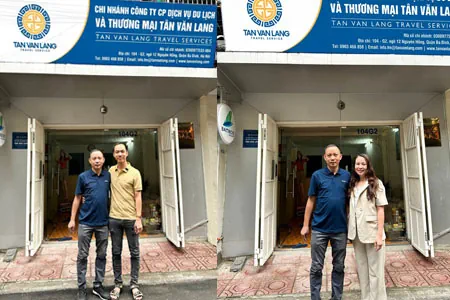
Established in 2003 with over 20 years of experience – 10,000+ successful Vietnam visa applications handled.
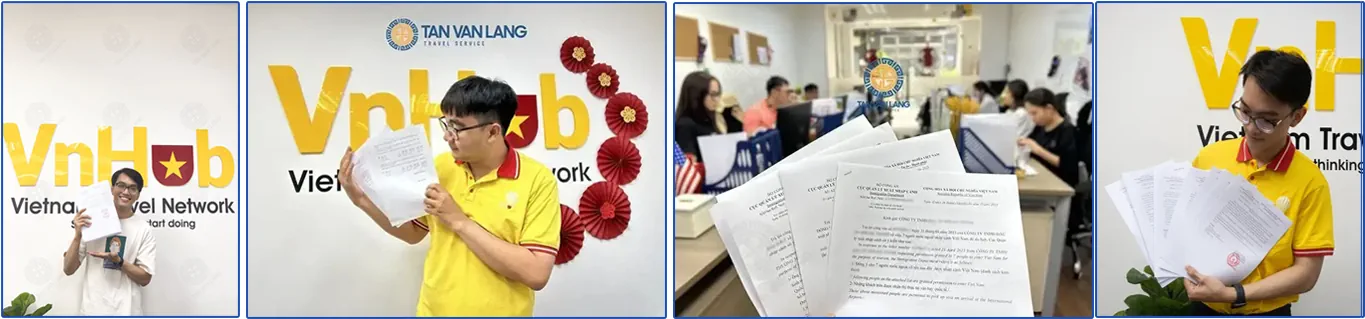
Vietnam visa service results for foreigners at Tan Van Lang
Vietnam visa extension for 3 months: what it means in practice
A Vietnam visa extension for 3 months allows a foreigner who is already in Vietnam to stay legally longer (and in some cases keep the same entry conditions, such as single-entry vs. multiple-entry). In Vietnam, “extension” is often used in everyday conversations, but the outcome can vary by case:
- Extend the stay (keeping the same visa type), or
- Adjust/renew the visa validity (sometimes treated as a new visa issuance/adjustment), depending on your current status and the Immigration Department’s review.
That’s why the first thing we check at Tân Văn Lang is your current visa type, remaining validity, sponsor/guarantor status, and where you registered temporary residence.
>>> Read more: Vietnam visa processing time: E-visa, Visa On Arrival 2026
What is a 3-month multiple-entry visa?
A 3-month multiple-entry Vietnam visa lets you enter Vietnam multiple times during the visa’s 3-month validity (each entry/stay conditions depend on the visa category and the granted stay period). This is commonly requested by foreigners who may travel in and out of Vietnam during the next 90 days.
>>> Read more: How to Stay in Vietnam Long Term: Your Complete Guide for 2026
Who can apply for a 3-month visa extension in Vietnam?
Not every visa can be extended the same way. In practice, extensions are typically considered for cases where you have a valid purpose and proper sponsor/guarantor documents.
Common visa categories that may be eligible include:
- Family visit/dependent visas
- Spouse/family-related stays (where a family member can sponsor)
- Business/work-related visas where a company sponsors (e.g., business, work, investment-related purposes)
Basic eligibility checklist
To proceed with a 3-month Vietnam visa extension, you generally need to meet these conditions:
- Passport validity: usually at least 3 months remaining (many cases prefer longer to reduce risk).
- Clean immigration record: no active violations, no entry ban, and not under exit suspension.
- Temporary residence registration: proof you have declared temporary residence in Vietnam (hotel/local police registration).
- Sponsor/guarantor readiness:
- For business/work/investment purposes: a Vietnam-based company acts as sponsor.
- For family/dependent purposes: an eligible family sponsor and supporting relationship documents.
>>> Read more: Do Russians need a visa for Vietnam? Complete guide 2026
Documents for a Vietnam visa extension for 3 months
Required documents (most cases)
- Form NA5 (application for visa issuance/amendment/extension of temporary residence).
- Original passport (validity typically 3+ months).
- Copy of current visa (and entry stamp page, if needed).
- Temporary residence proof/confirmation (your registered stay in Vietnam).
- Introduction letter (if a company submits/receives results on your behalf).
Additional documents (depending on visa type)
If a company sponsors you
- Company legal documents (business registration, seal/signature files as requested)
- Sponsor letter and explanation of extension purpose
- Relevant supporting paperwork tied to your status (work/investment/business plan, etc.)
If a family member sponsors you
- Proof of relationship (marriage/birth certificate, etc.)
- Sponsor’s Vietnam ID/residence evidence (as applicable)
- Sponsor letter and accommodation details
Tip from Tân Văn Lang: Even if you have the full checklist, the Immigration office may request extra supporting documents depending on your travel history, sponsor profile, and the purpose of stay. Plan for that.
>>> Read more: Hoi An Vietnam Travel: A Complete Guide for First-Time Visitors 2026
Step-by-step: How to extend a Vietnam visa for 3 months
Step 1: Prepare the NA5 and supporting documents
Complete NA5 carefully and consistently with your passport details and sponsor information.
Step 2: Submit the application and pay state fees
Applications are typically submitted at the Immigration office (see addresses below). Officers will screen your file:
- If complete: you pay fees and receive an appointment/receipt.
- If missing items: you’ll be asked to supplement.
Step 3: Processing and follow-up
Processing time varies by workload and season. Many standard cases are handled within about 5–7 working days, and longer during peak travel periods or around public holidays.
Step 4: Receive the result
Bring your receipt/appointment paper and identification for collection (or authorize a representative where permitted).
>>> Read more: Vietnam visa fees: Updated costs & What travelers should expect 2026
Vietnam visa extension fee for 3 months
For a 3-month multiple-entry visa extension, a widely referenced state fee is USD 50.
Notes you should budget for:
- State fee is not the only cost – translation/notarization, document legalization, and service fees (if any) are separate.
- Fees and outcomes can vary depending on whether your case is treated as a stay extension, visa issuance/amendment, or a different administrative action.
>>> Read more: Vietnam visa types: Categories 2026
Where to apply for a 3-month Vietnam visa extension
You can file at Vietnam Immigration Department offices, including Hanoi and Ho Chi Minh City.
Hanoi Immigration office
- Address: 44–46 Trần Phú, Ba Đình, Hà Nội
- Public contact references also list: (024) 3825-7941
Ho Chi Minh City Immigration office
- Address: 333–335–337 Nguyễn Trãi, District 1, Ho Chi Minh City
>>> Read more: Vietnam visa service: Fast & secure solution for your trip 2026
Common reasons a 3-month visa extension gets delayed or refused
These are the issues we see most often when clients come to Tân Văn Lang after a failed attempt:
- NA5 form errors (passport number, sponsor details, inconsistent dates)
- Temporary residence not properly declared
- Sponsor documents incomplete or not aligned with the requested visa category
- Prior overstays/penalties or unclear travel history
- Applying too close to visa expiry (leaving no buffer for supplementation)
>>> Read more: Vietnam Airport Fast Track Service 2026 – Skip the Lines, Save Time
When visa run is used as a short-term workaround
Vietnam visa extension for 3 months
under your current conditions, some travelers consider a visa run (exit and re-enter with a new visa). This is not a “guaranteed fix,” and it depends on your nationality, current status, and entry rules at the time you apply.If you’re close to expiry, we usually compare two options quickly:
- Extension/adjustment in-country, vs.
- Exit–re-entry with a new visa plan that matches your purpose.
Kết bài
A 3-month extension looks simple on paper, but outcomes depend on visa type + sponsor strength + paperwork quality. With 20+ years of immigration experience (since 2003), Tân Văn Lang can support you with:
- Pre-check for extension eligibility and realistic outcomes
- Exact document list tailored to your visa category
- NA5 completion support and dossier consistency check
- Submission and follow-up at the Immigration office
- Status updates and result delivery support (where applicable)
If you want us to check your case, send Tan Van Lang your current visa type, expiry date, nationality, and sponsor details, or contact our hotline 08.666.000.63 (WhatsApp) for a quick consultation.



 Vietnam visa for Indian on arrival 2026: Guide, Fees & Requirements
 1.100+ Followers