
Vietnam’s official public holidays in 2026 may affect travel plans, as many shops, offices, and government services close during these periods. Major holidays include New Year’s Day (Jan 1), the week-long Tet Festival (Feb 16–22), Hung Kings’ Day (Apr 26–27), Reunification Day & Labor Day (Apr 30–May 4), and National Day (Aug 30–Sep 3). These holidays are vibrant cultural moments but also peak travel times, so visitors should expect higher demand for transport and accommodation. Private businesses may follow flexible schedules, especially around Tet and National Day.
Official List of Vietnam National Holidays
The Vietnamese government designates specific days throughout the year as official public holidays when most businesses close and workers receive paid leave. For 2026, the Ministry of Labor, Invalids, and Social Affairs has confirmed the complete schedule, which differs slightly between public sector employees and private enterprise workers.
Public sector employees, including civil servants and government office workers, enjoy the following official holiday schedule:
| Holiday | Dates (2026) | Details |
|---|---|---|
| New Year’s Day | January 1, 2026 (Thursday) | A single public holiday to celebrate the start of the Gregorian calendar year. |
| Lunar New Year (Tet) | February 16–22, 2026 | A nine-day break combining five official public holidays with weekends, marking the longest holiday period of the year. |
| Hung Kings’ Commemoration Day | April 26, 2026 (Sunday) and April 27, 2026 (Monday, compensatory) | A holiday to honor Vietnam’s legendary founding fathers, with an extra day off in lieu. |
| Reunification Day and International Labor Day | April 30–May 4, 2026 | A five-day holiday that combines Reunification Day (April 30) and International Labor Day (May 1) with the adjacent weekend. |
| National Day | August 30–September 3, 2026 | A five-day holiday period commemorating Vietnam’s declaration of independence. |
Private sector businesses receive guidance rather than mandates, allowing flexibility in scheduling. Companies must announce their chosen holiday dates at least 30 days in advance, particularly for Tet and National Day when multiple options exist.
>>> Read more: How to Stay in Vietnam Long Term: Your Complete Guide for 2026
Tet Holiday (Lunar New Year) – The Most Important Holiday
The Tet holiday stands as Vietnam’s most significant celebration, deeply embedded in every aspect of Vietnamese culture. This Lunar New Year festival marks the arrival of spring according to the traditional Vietnamese calendar, typically falling between late January and mid-February on the Gregorian calendar.
In 2026, Tet officially begins on February 17 (the first day of the lunar year – Bính Ngọ), but celebrations extend well beyond this single date. The official holiday for public sector employees runs from Monday, February 16, 2026 (29th day of the 12th lunar month of Ất Tỵ year) through Friday, February 20, 2026 (4th day of the 1st lunar month of Bính Ngọ year).
Private companies working Monday through Friday schedules can choose from approved options: typically 1 day before Tet and 4 days after, or 2 days before and 3 days after, or 3 days before and 2 days after. Those operating six-day workweeks have similar flexibility within the regulatory framework.
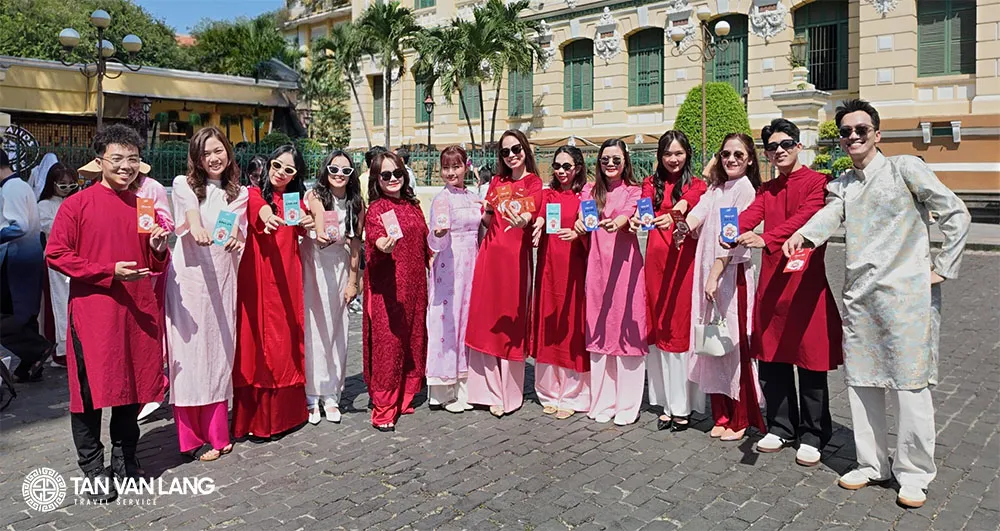
Vietnamese families spend weeks preparing for Tet. Homes undergo thorough cleaning to sweep away bad fortune, while people purchase new clothes, prepare special foods, and settle outstanding debts. Traditional dishes like banh chung (square glutinous rice cake) and mut (candied fruits) appear on every family’s table. The first visitor on Tet morning holds particular significance, as Vietnamese believe this person influences the household’s fortune for the entire year.
From our experience helping thousands of visa applicants at Tan Van Lang, we strongly recommend avoiding travel to Vietnam during the actual Tet days unless experiencing this festival is your primary purpose. Transportation becomes extremely crowded, many restaurants and shops close, and government offices halt operations completely. However, visiting in the weeks leading up to Tet offers a wonderful opportunity to witness preparation activities and festive decorations throughout cities and villages.
>>> Read more: Hoi An Vietnam Travel: A Complete Guide for First-Time Visitors 2026
Hung Kings’ Commemoration Day (Giỗ Tổ Hùng Vương)
Hung Kings’ Commemoration Day, observed on the 10th day of the third lunar month, honors the legendary Hung Kings who founded the first Vietnamese state approximately 4,000 years ago. In 2026, this falls on April 26 (Sunday), with employees receiving a compensatory day off on Monday, April 27.
According to Vietnamese mythology, the Hung Kings ruled the ancient Van Lang kingdom and established many cultural traditions still practiced today. The main commemoration ceremony takes place at the Hung Kings Temple in Phu Tho Province, where thousands of Vietnamese travel to pay respects to their ancestors. The phrase “Uống nước nhớ nguồn” (when drinking water, remember its source) perfectly captures the spirit of this day – acknowledging one’s roots and expressing gratitude to those who came before.
Unlike the extended Tet celebrations, Hung Kings’ Commemoration Day typically involves more solemn, respectful activities. Families visit temples, prepare traditional offerings, and participate in cultural performances. Government offices and most businesses close for the day, but the holiday’s impact on daily life remains relatively minimal compared to longer celebration periods.
For foreign visitors, this holiday offers an excellent opportunity to witness Vietnamese reverence for ancestral heritage. If you’re in Vietnam on April 26-27, consider visiting local temples or historical sites where special ceremonies occur. Our team at Tan Van Lang has helped numerous clients time their visa applications to ensure they can experience this meaningful cultural event.
>>> Read more: Vietnam visa fees: Updated costs & What travelers should expect 2026
Reunification Day (Ngày Giải Phóng Miền Nam, Thống Nhất Đất Nước)
Reunification Day on April 30 commemorates the fall of Saigon in 1975, marking the end of the Vietnam War and the reunification of North and South Vietnam under one government. This date holds profound significance for Vietnamese people, representing both the conclusion of decades of conflict and the beginning of national unity.
The official name, Ngày Giải Phóng Miền Nam (Southern Liberation Day), reflects the historical perspective taught in Vietnamese schools and celebrated throughout the country. On this day, Vietnamese flags adorn streets and buildings across the nation, particularly prominent in Ho Chi Minh City (formerly Saigon), where the historic events unfolded.
In 2026, Reunification Day falls on Thursday, April 30, immediately followed by International Workers’ Day on Friday, May 1. Combined with the weekend, this creates a four-day holiday period running from April 30 through May 4. This extended break ranks as the second-longest holiday period after Tet, prompting many Vietnamese families to travel domestically or abroad.
Major cities host official ceremonies, military parades, and cultural performances. In Ho Chi Minh City, the Reunification Palace – where North Vietnamese tanks famously crashed through the gates – becomes a focal point for commemoration activities. Museums and historical sites throughout Vietnam offer special exhibitions and programs exploring the war’s history and its lasting impact on Vietnamese society.
Travelers visiting during this period should expect increased domestic tourism, higher accommodation prices, and potential transportation bottlenecks. However, the festive atmosphere and patriotic celebrations provide unique cultural insights unavailable during ordinary times.
>>> Read more: Top 10 Must-Visit Vietnam Travel Locations for an Unforgettable Trip
International Workers’ Day (Ngày Quốc Tế Lao Động)
Vietnam celebrates International Workers’ Day on May 1, joining countries worldwide in honoring laborers’ contributions to society. This holiday recognizes workers’ rights, achievements, and ongoing struggles for fair treatment in the workplace.
Given Vietnam’s socialist orientation, International Labor Day carries particular ideological significance. The holiday reinforces the government’s commitment to worker welfare and provides an opportunity for labor unions to organize events, rallies, and educational programs. Many companies use this occasion to recognize employee achievements, distribute bonuses, or organize recreational activities.
In 2026, May 1 falls on Friday, conveniently adjacent to Reunification Day. The government has structured this as a unified four-day holiday period, allowing families extended time for travel and relaxation. This scheduling demonstrates the Vietnamese approach to holiday planning—maximizing rest periods by combining official holidays with weekends.
For businesses operating in Vietnam, this extended holiday period requires careful planning. Manufacturing operations may need to build inventory buffers, while service industries should prepare for reduced staffing. Foreign investors working with Vietnamese partners must account for these closures when establishing project timelines and delivery schedules.
Our consultants at Tan Van Lang frequently advise business travelers to avoid scheduling crucial meetings or contract signings during late April and early May. The combination of Reunification Day and International Workers’ Day creates an extended period when government offices, banks, and many private enterprises operate with skeleton crews or close entirely.
>>> Read more: Vietnam Entry Approval Letter: Requirements, process & fees 2026
National Day (Ngày Quốc Khánh)
September 2 marks Vietnam’s National Day, celebrating the 1945 declaration of independence when President Ho Chi Minh proclaimed the Democratic Republic of Vietnam in Hanoi’s Ba Dinh Square. This date represents Vietnam’s emergence as a sovereign nation after decades of French colonial rule.
Independence Day Vietnam ceremonies center on Hanoi, particularly at Ba Dinh Square where the historic declaration occurred. In 2026, the 81st anniversary of this momentous event will feature grand celebrations with military parades, cultural performances, and patriotic displays across the country.
Evening fireworks displays will illuminate major cities, with Hanoi hosting shows at iconic locations like Hoan Kiem Lake, Thong Nhat Park, and West Lake. These spectacular shows attract enormous crowds, with families gathering hours in advance to secure good viewing positions.
For 2026, National Day falls on Wednesday, September 2. According to the Ministry of Interior’s notification, public sector employees will enjoy a five-day holiday from Saturday, August 30 through Wednesday, September 2. This includes a day swap arrangement where Monday, August 31 is moved to Saturday, August 22, allowing for an extended break.
Private companies may choose between options: September 2-3 (Wednesday-Thursday) or September 1-2 (Tuesday-Wednesday), with the requirement to announce their decision at least 30 days beforehand.
The National Day period generates significant domestic travel as Vietnamese citizens return to hometowns or explore tourist destinations. Coastal cities like Da Nang, Nha Trang, and Vung Tau see particularly heavy visitor traffic. International travelers should book accommodations well in advance and expect premium pricing during this peak period.
>>> Read more: Airport Fast Track in Vietnam 2026 – Skip the Lines, Save Time
Regulations on Compensatory Holidays in Vietnam
Vietnamese labor law includes specific provisions ensuring employees receive appropriate rest even when official holidays fall on their regular days off. Understanding these compensatory holiday regulations helps both employers and employees navigate their rights and obligations.
The fundamental principle states that if a public holiday coincides with an employee’s weekly rest day, the worker receives compensatory time off on the next working day. For example, if Hung Kings’ Commemoration Day falls on Sunday (as it does in 2026), employees would receive Monday off as compensation. This regulation ensures that workers benefit from all designated public holidays regardless of calendar alignment.
The government distinguishes between different holiday types when determining compensation. Official public holidays – those specifically designated by law – qualify for compensation when they overlap with weekends. Regular weekends do not receive additional compensation even when extended by adjacent holidays.
Employers must clearly communicate their chosen holiday schedules to employees, particularly for Tet and National Day when multiple timing options exist. The law requires this notification at least 30 days in advance, allowing workers to plan personal activities, family gatherings, and travel arrangements. Companies failing to provide adequate notice may face labor disputes and potential penalties.
Private sector businesses enjoy flexibility in structuring their holiday policies, but they cannot provide fewer holidays than the legal minimum. Some companies choose to exceed minimum requirements, offering additional rest days or alternative scheduling arrangements that benefit their workforce while maintaining operational efficiency.
>>> Read more: Vietnam Visa on Arrival (VOA): The Complete 2026 Guide
Impact of National Holidays on Travel and Business in Vietnam
Vietnamese public holidays significantly affect both tourism and business operations throughout the country. Understanding these impacts enables better planning whether you’re visiting as a tourist, conducting business, or managing operations within Vietnam.
Transportation systems experience extreme pressure during major holiday periods, particularly Tet and the combined Reunification Day-Labor Day break. Domestic flights, trains, and buses sell out weeks in advance as millions of Vietnamese travel to hometowns or vacation destinations. International flights also see increased demand and higher prices. Roads become congested with traffic, and journey times often double or triple compared to normal conditions.
Accommodation prices surge during peak periods, with popular tourist destinations implementing premium rates and minimum stay requirements. Beach resorts, mountain retreats, and cultural sites in places like Hoi An, Sapa, and Phu Quoc reach capacity quickly. Hotels that normally charge reasonable rates may double or triple their prices during Vietnamese holidays schedule peaks.
Government offices and services operate on reduced schedules or close entirely during official holidays. Visa processing, business registration, tax payments, and other bureaucratic procedures halt during these periods. Foreign investors and business travelers must account for these closures when planning activities requiring government interaction.
Banking services face similar disruptions. While ATMs generally remain functional, branch operations cease, and international transfers may experience delays. Companies managing payroll, supplier payments, or customer transactions must plan around these holiday interruptions to maintain smooth financial operations.
Manufacturing and logistics operations experience both direct and indirect impacts. Factories may close completely during Tet, with some extending shutdowns to allow deep cleaning, maintenance, and equipment upgrades. Supply chains slow or stop as transportation companies reduce operations. International shipping from Vietnamese ports may experience delays as cargo handling crews take holiday leave.
Retail businesses and restaurants present a mixed picture. Major shopping centers in urban areas increasingly remain open during holidays to capture consumer spending, though they may operate reduced hours. Traditional markets and small shops often close, particularly during Tet when owners return to ancestral villages. Tourist-focused restaurants in popular areas generally stay open, but local establishments frequented by Vietnamese families may close for extended periods.
>>> Read more: How to Apply for a Vietnam Tourist Visa for Foreigners (Visa DL)- Complete Guide 2026
Tips for Traveling in Vietnam During Public Holidays
Successfully navigating Vietnam during public holidays requires advance planning, flexibility, and realistic expectations. Our years of experience at Tan Van Lang guiding international visitors through peak travel periods have taught us valuable lessons worth sharing.
Book everything early – and we mean everything. Flights, hotels, train tickets, and even popular restaurant reservations should be secured months in advance for major holidays. Prices increase as availability decreases, so early booking provides both cost savings and peace of mind. Consider purchasing flexible tickets when possible, as holiday plans sometimes require adjustment.
Build buffer days into your schedule around major holidays. If you need to complete government-related tasks like visa extensions or business registrations, finish them well before holidays begin or plan to handle them after the holiday period ends. Never assume you can accomplish bureaucratic tasks during holiday weeks.
Embrace the festive atmosphere rather than fighting against it. Vietnamese holidays offer unique cultural experiences unavailable during ordinary times. Tet decorations, National Day ceremonies, and holiday markets provide wonderful opportunities to understand Vietnamese culture more deeply. Instead of viewing crowds as obstacles, see them as part of the authentic Vietnamese experience.
Consider visiting less-popular destinations during major holidays. While Hanoi, Ho Chi Minh City, and famous beaches become packed with domestic tourists, smaller cities and rural areas may offer more relaxed experiences. Places like Hue, Dalat, or the Mekong Delta provide rich cultural experiences without the overwhelming crowds found in top-tier tourist destinations.
Carry extra cash during holiday periods. ATMs sometimes run empty from heavy usage, and many small businesses don’t accept cards. Having sufficient cash ensures you can purchase necessities and take advantage of opportunities without depending on potentially unreliable electronic payment systems.
Adjust your expectations for service quality and wait times. Restaurants may be short-staffed, attractions may be crowded, and everything takes longer during peak periods. Patience becomes essential, as does a sense of humor about inevitable delays and complications. Vietnamese people generally remain friendly and helpful even during chaotic holiday conditions.
>>> Read more: Vietnam family visit visa: Requirements, process & fees 2026
Cultural Significance of Major Vietnamese Holidays
Understanding the deeper cultural meaning behind Vietnam’s national holidays enriches any visit and demonstrates respect for Vietnamese traditions. These celebrations reflect core values that have sustained Vietnamese society through centuries of change and challenge.
Tet embodies the Vietnamese concept of renewal and family bonds. The holiday marks not just a new year but an opportunity to reset relationships, forgive past grievances, and approach the future with optimism. The extensive preparations reflect beliefs about starting fresh—cleaning homes to remove bad luck, settling debts to clear obligations, and wearing new clothes to symbolize new beginnings. Family reunion dinners on Tet Eve rank among the most important social obligations in Vietnamese culture, with people traveling vast distances to gather with relatives.
Hung Kings’ Commemoration Day reinforces the Vietnamese connection to ancestral heritage and national identity. The phrase “con rồng cháu tiên” (children of dragons, grandchildren of fairies) references legendary origins that unite Vietnamese people regardless of regional differences or contemporary political divisions. This holiday reminds Vietnamese citizens of shared roots stretching back thousands of years, fostering national cohesion through collective memory.
Reunification Day and National Day celebrate Vietnamese resilience and independence. Both holidays commemorate victories over foreign powers—France in 1945, and the reunification following the American War in 1975. These celebrations emphasize themes of national sovereignty, self-determination, and pride in Vietnamese achievement despite facing more powerful adversaries. The military parades and patriotic ceremonies visible on these days demonstrate continued commitment to defending independence.
International Workers’ Day reflects Vietnam’s socialist ideological foundation and commitment to workers’ welfare. While economic reforms have introduced market mechanisms, the holiday reaffirms governmental responsibility for protecting labor rights and ensuring equitable development. This balance between market efficiency and social protection characterizes Vietnam’s contemporary political economy.
>>> Read more: Vietnam visa service: Fast & secure solution for your trip 2026
Frequently Asked Questions
How many official public holidays does Vietnam have in 2026?
Vietnam observes 10 official public holiday days in 2026, structured into several multi-day periods including Tet (5 days), Reunification Day-Labor Day (2 days), and National Day (2 days), plus New Year’s Day and Hung Kings’ Day.
Can I apply for a visa during Vietnamese public holidays?
No, Vietnamese embassies, consulates, and visa processing offices close during official public holidays. Plan your visa application to avoid these dates, or work with experienced consultants like Tan Van Lang who can guide you through optimal timing.
Do all businesses close during Tet holiday?
Most businesses close during Tet, particularly local shops and restaurants. Tourist-focused establishments in major cities may remain open with reduced hours. International hotel chains and airports continue operations, though with limited services.
Is it expensive to travel to Vietnam during national holidays?
Yes, domestic travel costs increase significantly during major holidays as Vietnamese families travel extensively. Accommodation, flights, and transportation see premium pricing, often 50-200% above regular rates.
What should foreign investors know about Vietnam’s holiday schedule?
Foreign investors should plan project timelines accounting for extended holiday closures, particularly the nine-day Tet period. Government approvals, bank transactions, and contract signings cannot occur during these periods, requiring advance planning to avoid delays.
Are shops and restaurants open during National Day celebrations?
Many shops and restaurants remain open during National Day, especially in urban areas and tourist destinations, though some may operate reduced hours or close early for fireworks and celebrations.
How far in advance should I book travel during Vietnamese holidays?
Book at least 2-3 months in advance for major holidays like Tet and Reunification Day. Earlier booking ensures better availability and pricing, particularly for popular routes and destinations.
Understanding Vietnam national holidays transforms from mere calendar awareness to strategic advantage when properly applied. Whether you’re planning tourist adventures, managing business operations, or navigating visa requirements, this knowledge proves invaluable. Our team at Tan Van Lang remains ready to help you plan your Vietnam experience around these important dates, ensuring smooth travels and successful outcomes. Contact us today for personalized visa consultation and travel planning assistance that accounts for Vietnam’s rich holiday calendar and cultural traditions.


 Hoi An Vietnam Travel: A Complete Guide for First-Time Visitors 2026
  Vietnam driving license for foreigners 2026: How to convert, fees, and processing time
  Instructions for entry at Noi Bai airport (HAN) 2026: Documents, steps, customs, and fast track support
  Instructions for entry at Phu Quoc airport 2026
  Instructions for entry at Cam Ranh airport 2026
  Instructions for entry at Da Nang airport 2026
 1.100+ Followers