If you want to know how to get residency in Vietnam, the most practical route is usually to obtain the correct visa basis first, then apply for a Vietnam Temporary Residence Card (TRC) through work, investment, study, or family sponsorship, because this is the standard form of long-term legal stay for most foreigners.
Permanent residence exists, but it is much harder and only available in limited cases defined by law. In other words, Vietnam does not have a simple “live long enough and get residency” system. To stay legally and long-term, expats usually need the right sponsor, correct documents, proper temporary residence registration, and a TRC that matches their visa category.
Understanding residency options in Vietnam: Temporary residence card vs permanent residence
In Vietnam, the phrase residency usually refers to one of two things: temporary residence or permanent residence. These are very different legal concepts, and confusing them is one of the most common mistakes foreign applicants make.
A Vietnam Temporary Residence Card, often called a TRC Vietnam, is a time-limited residence document issued to eligible foreigners. By law, a temporary residence card has the same validity as a visa, but it allows longer lawful stay and multiple entries during its validity period.
Permanent residency is a different matter. Foreign nationals may be allowed to reside in Vietnam indefinitely through naturalization; however, this pathway is strictly limited by law to specific categories. These typically include individuals who have made significant contributions to the country, certain scientists or highly qualified experts, foreigners sponsored by their Vietnamese parents, spouses, or children, and a small group of stateless persons who have been residing in Vietnam since before 2000.
For most expats, “residency” in Vietnam actually means getting a Temporary Residence Card (TRC). The real target is a Vietnam Temporary Residence Card, not permanent residence. Permanent residence is possible in special cases, but it is not a general “stay long enough and become a resident” system.
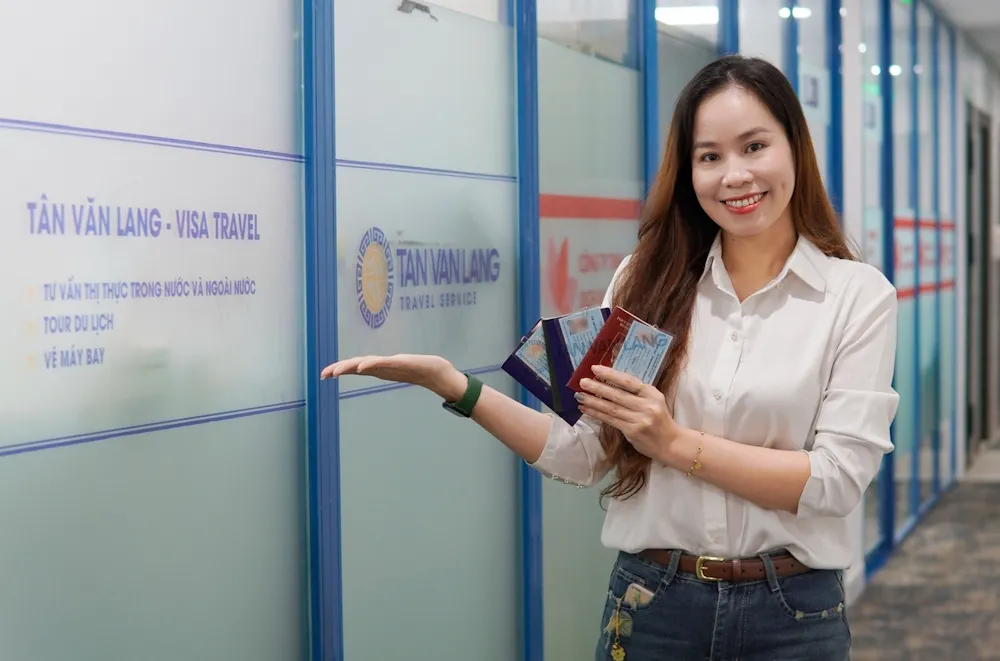
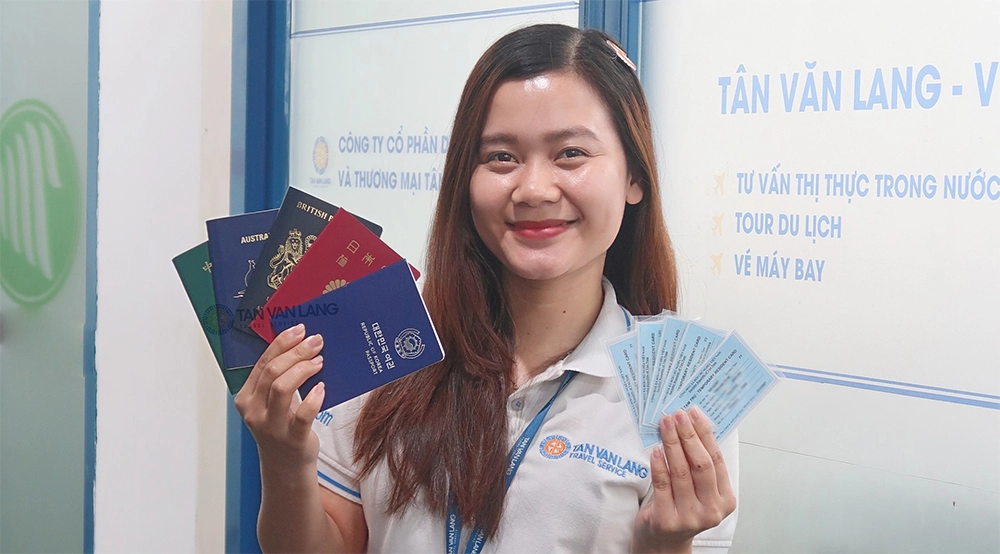
Tan Van Lang provides professional Temporary Residence Card consultation services for foreigners in Vietnam.
The most common legal routes to expat residency in Vietnam
The most common routes to Expat Residency Vietnam are the work route, the investment route, the family route, and the study route. Each route must start with the correct legal purpose of entry and the correct supporting documents.
Work route: Work Permit Vietnam – LD visa – TRC
This is the most common route for foreign professionals. In practice, the employer first builds the labor compliance file, then the foreign employee applies under the work-related visa category and later the Vietnam Temporary Residence Card.
Under Vietnam’s current visa classification, LD1 Visa and LD2 Visa are the main work-related categories. If your employment documents are weak, incomplete, or inconsistent with your actual job, the TRC step usually becomes risky even if you already entered Vietnam lawfully.
Investment route: Investor Visa Vietnam + DT category + TRC
Foreign investors may use the Investor Visa Vietnam route, commonly linked with DT1 Visa, DT2 Visa, DT3 Visa, and DT4 Visa categories. These categories matter because they affect both your legal basis of stay and the possible TRC validity you may receive.
From our practical experience, not every investor category leads to the same long-term outcome. Lower-tier investment classifications may support entry and short-term stay, but the length and strength of the residence solution depend on the actual investment structure, legal documents, and immigration classification accepted by the authorities.
Family route: Family Reunion Visa and TT Visa
The family route is common for spouses, children, and some close relatives. In Vietnam, the TT Visa applies to foreigners who are spouses or children under 18 of foreigners holding certain long-term visas, or to foreigners who are parents, spouses, or children of Vietnamese citizens.
This is the legal basis behind what many applicants call a Family Reunion Visa. In many real cases, the family route is cleaner and more stable than repeatedly extending short tourist-style stays.
Study route
Foreigners holding the DH visa category may also be eligible for a temporary residence card. This route is narrower in practice, but it is still a lawful residency basis while the study conditions remain valid.
Required documents for a Vietnam Temporary Residence Card application
The law states that a TRC dossier includes four core components: a written request from the inviting or guaranteeing agency, organization, or individual; a declaration form with photo; the applicant’s passport; and documents proving eligibility under the corresponding category.
In real cases, the supporting evidence varies by route. That is where many applications succeed or fail.
Route
Typical supporting documents
Work route
Passport, visa/status basis, employer file, labor approval/work permit or exemption documents, immigration forms
Investor route
Passport, visa/status basis, enterprise and investment records, capital contribution proof, immigration forms
Family route
Passport, visa/status basis, marriage/birth/family relationship proof, sponsor’s ID or residence documents, immigration forms
Study route
Passport, school or program documents, visa/status basis, immigration forms
Based on our advisory experience, one of the biggest practical issues is document consistency. Your passport details, visa purpose, sponsor identity, company records, labor file, and temporary residence declaration should all point in the same direction.
Step-by-step process to apply for Temporary Residence Card in Vietnam
Step 1: Enter Vietnam on the correct legal basis
You should not start with the idea that any visa can later be turned into residency without friction. The safest strategy is to enter under the correct purpose from the beginning, especially for work, investment, or family-based stays.
Step 2: Complete temporary residence declaration
Vietnamese law requires foreigners to have their place of stay declared for temporary residence through the accommodation manager, hotel, landlord, or responsible housing party. The law also requires this declaration quickly after arrival, generally within 12 hours, or 24 hours in remote and deep-lying areas.
One of the biggest mistakes is most applicants overlook is that this step is not cosmetic. Failure to properly register temporary residence can create problems later when you apply for a TRC Vietnam, renew status, or explain your residence history to the authorities.
Step 3: Finalize the sponsor-side compliance file
For workers, this usually means labor and sponsor-side records are complete. For investors, it means the legal entity and investment records are clean. For family applicants, it means the relationship documents and sponsor’s identity basis are properly prepared.
Step 4: Submit the TRC dossier
The law states that inviting or guaranteeing organizations and individuals submit the dossier to the immigration management agency in the locality where the sponsor is located or where the foreigner resides. In practice, many dossiers are handled through the immigration system in Hanoi, Da Nang, or Ho Chi Minh City, depending on the case.
Step 5: Receive the residence card
After approval, the foreigner receives the Vietnam Temporary Residence Card. This card then functions as the main residence document for lawful long-term stay during its validity period.
With over 20 years of experience, we ensure reliable and efficient long-term stay solutions
Processing times and official fees for residency cards
The law provides that the immigration authority shall consider granting a temporary residence card within 5 working days after receiving a complete dossier. That is the legal benchmark, though real-world handling can still depend on dossier quality and whether clarification is requested.
The official state fee schedule commonly used for temporary residence cards is:
TRC validity
Official state fee
Up to 2 years
USD 145
More than 2 years to 5 years
USD 155
More than 5 years to 10 years
USD 165
These fee levels come from the Ministry of Finance fee schedule on immigration and residence procedures. Separate service fees, translation, notarization, legalization, and compliance support costs are not part of the government fee itself.
How long is a Vietnam Temporary Residence Card valid?
Under the law, the card must be at least 30 days shorter than the remaining validity of the passport. The law also sets the classic caps at up to 5 years for certain categories such as NG3, LV1, LV2, ĐT, and DH; up to 3 years for NN1, NN2, and TT; and up to 2 years for LĐ and PV1.
The first major benefit is obvious: you can stay in Vietnam long-term without relying on constant Vietnam Visa Extension cycles or repeated visa runs. A TRC also works as a multiple-entry residence document during its validity, which is much more practical for businesspeople, expatriate staff, and families.
The second benefit is administrative stability. A proper residence card usually makes everyday compliance easier when dealing with banks, leases, tax registration, company administration, and family arrangements, although each institution still has its own requirements.
The third benefit is legal clarity. Instead of stretching a short-stay entry document beyond its practical purpose, you hold a residence document designed for longer presence in Vietnam.
The first common problem is a mismatched legal basis. The visa purpose, sponsor type, labor file, investment file, and actual activity in Vietnam must align.
The second problem is poor temporary residence compliance. If the applicant’s place of stay has not been declared properly, that can create avoidable friction with the authorities.
The third problem is passport validity. The law clearly states that the TRC validity must be shorter than the passport validity by at least 30 days, so a passport near expiry can break the plan.
The fourth problem is wrong expectations about e-visas. A 90-day e-visa can be useful as an entry mechanism, but it is not itself expat residency.
The fifth problem is using non-official websites. The Vietnam Immigration Department announced that the official electronic visa portals operate on evisa.gov.vn and thithucdientu.gov.vn. Scam websites often imitate government pages, collect inflated payments, or produce bad data that later causes entry or residence issues.
This is a key legal requirement most applicants overlook is entry checkpoint consistency. Foreigners using e-visas must use government-approved international border gates, and careless selection of the wrong checkpoint can create problems at boarding or arrival.
Yes, but only in limited categories defined by law. These include people with meritorious contributions to Vietnam, certain scientists or experts, foreigners guaranteed by a Vietnamese parent, spouse, or child, and certain stateless persons resident since 2000 or earlier.
Family-sponsored permanent residence applicants must also have been temporarily residing in Vietnam for at least 3 consecutive years. The law states that permanent residence decisions are generally made within 4 months, with a possible extension of up to 2 more months for further verification.
So if your question is how to get residency in Vietnam, the honest legal answer is this: for most expats, the practical route is temporary residence first, not permanent residence.
1. Can I get residency in Vietnam by buying property?
No. Buying property is not a direct immigration route to residency in Vietnam. Foreign individuals may be allowed to own certain housing under housing law, but property ownership itself does not create a visa, TRC, or permanent residence right.
2. How long is a Vietnam Temporary Residence Card valid?
It depends on your category and passport validity. Under the law, common caps are up to 5 years for certain investor and institutional categories, up to 3 years for TT, and up to 2 years for LĐ, with the card always needing to be at least 30 days shorter than passport validity.
3. Can digital nomads apply for residency in Vietnam?
Not as a standalone “digital nomad residency” category under the mainstream immigration law. A foreigner still needs a valid legal basis such as work, investment, family, or study to move from short stay to residence-card status.
4. Do I need a Work Permit to get a Temporary Residence Card?
In most employee cases, you need a solid labor-compliance basis, often including a work permit or valid exemption structure, before the work-based residence strategy is safe. This is one of the most important practical checkpoints in the Work Permit Vietnam route.
5. Can my family members get residency based on my work visa?
In many cases, yes. The TT Visa route may support spouses and children under 18 of eligible foreigners, and family members of Vietnamese citizens may also use the TT category where the law permits.
6. What is the minimum investment required for an Investor TRC?
The practical answer depends on how the investment is classified under the applicable DT category and how immigration evaluates the supporting records. The legal route is not just about depositing money. It is about the lawful investment structure, company file, and category recognized by the authorities.
7. How do I renew my Vietnam Residency Card before it expires?
You should start early and review the full sponsor-side compliance file before expiry. If the legal basis still exists, applicants whose TRCs have expired may be considered for a new card, but waiting until the last moment creates unnecessary risk.
Conclusion
If you want a legally sound long-term stay strategy in Vietnam, it is far better to structure the case correctly from the start than to fix a weak file after refusal, overstaying risk, or sponsor mismatch.

The first common problem is a mismatched legal basis. The visa purpose, sponsor type, labor file, investment file, and actual activity in Vietnam must align.
 The first common problem is a mismatched legal basis. The visa purpose, sponsor type, labor file, investment file, and actual activity in Vietnam must align.
 The second problem is poor temporary residence compliance. If the applicant’s place of stay has not been declared properly, that can create avoidable friction with the authorities.
 The third problem is passport validity. The law clearly states that the TRC validity must be shorter than the passport validity by at least 30 days, so a passport near expiry can break the plan.
 The fourth problem is wrong expectations about e-visas. A 90-day e-visa can be useful as an entry mechanism, but it is not itself expat residency.
 The fifth problem is using non-official websites. The Vietnam Immigration Department announced that the official electronic visa portals operate on evisa.gov.vn and thithucdientu.gov.vn. Scam websites often imitate government pages, collect inflated payments, or produce bad data that later causes entry or residence issues.
 So if your question is how to get residency in Vietnam, the honest legal answer is this: for most expats, the practical route is temporary residence first, not permanent residence.